• About William Beaudine
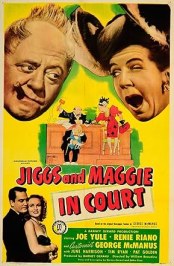
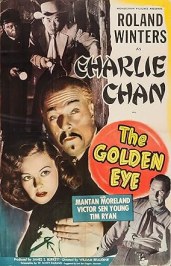
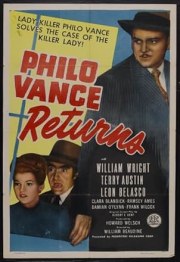
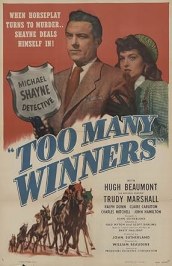
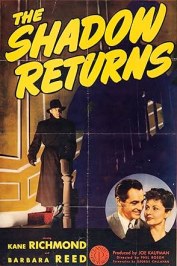
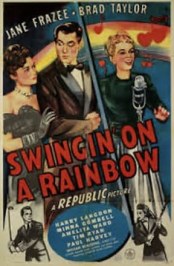
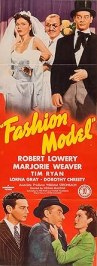
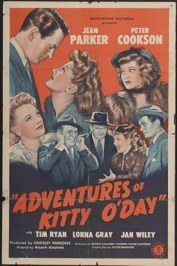
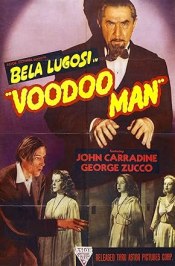
William Beaudine, the director of nearly 350 known films (nearly one for every day of the year; some listings of his work put his output at 500 movies and hundreds of TV episodes) and scores of television episodes, enjoyed a directing career that stretched across seven decades from the 'Teens to the '70s (he also was a screenwriter, credited on 26 films and one TV series). His movies, ranging from full-length features to one- and two-reel shorts, included the notorious Mom and Dad (1945) of 1945--the Gone with the Wind (1939) of the hygiene/exploitation genre--for infamous producer Kroger Babb, one of the notorious "Forty Thieves" of the exploitation circuit. His final, as well as very likely best-known, films were the grind-house/drive-in horror classics Billy the Kid Versus Dracula (1966) and Jesse James Meets Frankenstein's Daughter (1966) (in 1966, when he made these two cheapies, he was the oldest active director in Hollywood, at 74). Beaudine was prolific not only because he mastered efficient filmmaking but also because he started in the early days of the film industry, when one- and two-reelers were ground out like sausages, and that's how he learned to make them. Although he was responsible for some prestigious pictures in the silent era--i.e., Mary Pickford's Sparrows (1926)--after 1937 he worked primarily churning out programmers at Poverty Row studios. When producers needed an efficiently-made potboiler shot on a two-week (or less) schedule, William Beaudine was the go-to guy, and he remained so through the mid-'60s. William Washington Beaudine was born January 15, 1892, in New York City, an advantageous location for a tyro filmmaker at the turn of the last century, because the original "Hollywood" of America was located in nearby Ft. Lee, NJ (Thomas A. Edison, the inventor of the first motion picture production device and, more importantly, holder of several of its most important patents, was headquartered there. The patent monopoly he helped found did not want filmmakers operating too far away, as it wanted to oversee the industry to ensure it did not use pirated equipment that infringed its patents. California arose as a major production center in the 'Teens because it was far away from the prying eyes of the Edison trust, which was not averse to hiring thugs to wreck the equipment and beat up the employees of companies that defied it). Beaudine started in the industry as a $10-per-week prop boy, factotum and extra in 1909 with American Mutoscope and the Biograph Co., where he first worked with D.W. Griffith, the father of the American film. He began appearing as an actor in Mack Sennett's Biograph films in 1912 and continued to work behind the camera while appearing in front of it in 44 films through 1915. From 1911-14 he was an assistant director or second-unit director on 55 movies. He wed Marguerite Fleischer in October 1914 (they remained married until his death in 1970), the same year he moved to California. Although hired by the Kalem Co. as an actor, he got his first chance to direct while working on the studio's "Ham and Bud" comedy series in 1915. He directed at least five films in 1915, and served as an assistant to Griffith on his seminal masterpiece The Birth of a Nation (1915) and its follow-up, the aptly named Intolerance (1916). By 1916 Beaudine was making $100 per week as a director, and turned out as many as 150 short comedies before graduating to feature film assignments in 1922. Beaudine, like fellow director John Ford, was known for "editing in the camera", i.e., shooting only those scenes that are absolutely necessary, which saved time and raw stock. He did not shoot full coverage of scenes, with master shots and alternate takes (his contemporary William A. Wellman, another master of editing in the camera, did Beaudine--who was known as "One-Shot"--one better as "Two-Shot"--he would film two shots of a scene in case one was ruined in the developing lab), but no more than what he knew was necessary, and since he worked almost exclusively on low-budget "quickies" for the last 30 years of his career (he directed over half of the Bowery Boys films), producers valued him for his ability to make pictures quickly and economically, despite the gaffes (which likely would not be noticed by the audiences for these movies anyway). His attitude towards most of the films he was shooting at the time can be summed up by an incident in the 1940s, when he was informed that an East Side Kids quickie he was making for Monogram was falling behind schedule. His reply was, "You mean someone out there is actually waiting to see this . . . ?". Beaudine churned out low-budget films by the gross, in a wide variety of genres. That's why it may be difficult for some to believe that, in the silent days, he was one of the more respected directors in the industry, and had established himself as a seasoned comedy director with a light but sure touch for such major studios as Goldwyn, Metro, First National and Warner Bros. He was renowned for his skill at working with children, which won him two assignments directing films for Mary Pickford at United Artists: Little Annie Rooney (1925) and the above-mentioned "Sparrows", a Gothic suspense thriller that is an ur-The Night of the Hunter (1955) (it reportedly influenced "Hunter" director Charles Laughton). Beaudine's finest silent film is generally considered to be The Canadian (1926), based on a story by W. Somerset Maugham. By the time talkies arrived, Beaudine was a top director in Hollywood, his salary increasing from $1,250 a week in 1925 to $2,000-$2,500 a week in 1926. For directing the "Izzy and Mike" (Jewish/Irish comedy) The Cohens and the Kellys in Paris (1928) in 1928, he earned $20,000 (approximately $215,000 in 2006 terms), which was not bad considering the speed at which he turned out his films. Even after the Great Depression hit in 1929, as late as 1931 Beaudine was commanding $2,000 a week. Unfortunately, like many other Americans, he was heavily leveraged in the stock market and was virtually wiped out by the Crash of '29. He moved to England in 1935 and directed more than a dozen films there before returning to the US. Once home, however, he discovered that during his absence Hollywood got along just fine without him, and he couldn't find a job for two years. When he was finally offered work it was near the bottom of the Hollywood food chain, at low-rent studios like Monogram or PRC. By 1940 his once flourishing career had declined to the point that, where he had once commanded $2500 a week, he was now lucky to get jobs paying $500 a picture, and was turning out bottom-of-the-double-bill films like Desperate Cargo (1941) and the The Ape Man (1943). The lowest point of his career is generally considered to be the aforementioned "Mom and Dad" for Kroger Babb (an independent producer who often released through Monogram, for whom Beaudine did much work). "Mom and Dad" was a "hygiene" picture, featuring footage of a live birth, that Babb "four-walled" in territories across the U.S. ("four-walling" was the practice of renting an entire theater outright, which meant that after the rental fee was paid, all money taken in went to the exhibitor). Babb was a master showman, and his practice of having screenings for males and females at separate times, and providing a "doctor" and two "nurses" (who were in reality actors) to give a hygiene lecture and sell sex hygiene books at inflated prices (the money being collected by the "nurses", who ostensibly were there lest anyone faint from such a frank divulging of "the facts of life") was a masterful touch, capitalizing on the extreme sexual repression of the era to titillate and make a barrel full of money while doing it. These tactics were also helpful in keeping local authorities at bay--after all, who could close down a theater that showed such an "educational" film? Some cinema historians say that "Mom and Dad" may well have been, on a return-on-investment basis, the most profitable film in history, grossing as much as $100 million. Babb later recounted that each one of his investors got back $63,000 for each $1,000 invested in the film. In a pre-"Kinsey Report" world filled with ignorance and misinformation--deliberate and otherwise--about biology and sex, "Mom, and Dad" filled a void and turned a handsome profit while doing so (it was playing at drive-ins in the South and Midwest at least until 1977, long after the sexual revolution of the "Swinging Sixties", so potent was the "birth of a baby" come-on to the rural audiences for whom it was made). "Mom and Dad" was likely the top-grossing picture of 1947. The film was so heavily promoted that "Time" magazine commented that the ad campaign "left only the livestock unaware of the chance to learn the facts of life." Until the advent of The Blair Witch Project (1999), many film historians regarded "Mom and Dad" as the purest and most successful exploitation film in history. By the end of the 1940s Beaudine had churned out 60 movies. Still, he was regarded highly enough as a man who could make a movie quickly and efficiently to command a salary of $3,000 per week for The Lawton Story (1949), an adaptation of a Passion Play staged in Lawton, OK (which was re-released in 1951 by Babb's Hallmark company). His paced slowed somewhat in the 1950s, when he made only 23 films, most of them for Allied Artists (formerly Monogram). A quarter-century after directing superstar Mary Pickford, Beaudine was reduced to piloting a washed-up, drug-addicted former Dracula and two Dean Martin and Jerry Lewis clones in the pathetic Bela Lugosi Meets a Brooklyn Gorilla (1952), with Lugosi, Duke Mitchell (the Martin clone) and Sammy Petrillo (the Lewis clone). In the "plot", Mitchell is turned into--what else?--a singing gorilla. Beaudine, who had worked with Lugosi in 1943's "The Ape Man" and the East Side Kids entry Ghosts on the Loose (1943) (most memorable for featuring a young Ava Gardner), wrapped the film in nine days on a budget of $50,000. In fact, during his preparation for playing Lugosi in Ed Wood (1994), the chronicle of another director of bad movies, Martin Landau watched "Brooklyn Gorilla" three times. Landau, who would earn an Oscar for his turn as Lugosi, said that it was so bad "it made the Ed Wood films look like 'Gone with the Wind'". In 1947, two years after giving the world the landmark naughty picture "Mom and Dad", Beaudine was contracted by an evangelical Christian organization, the Protestant Film Commission, to make a religious-themed movie (beginning in the late 1940s, evangelist Billy Graham had done quite well in converting non-believers with movies made specifically for that purpose). It was successful and the PFC hired him on a regular basis to make more films. By 1955 Beaudine had directed ten of them for the Commission, all crafted to spread the word of God and convert non-believers to Christianity. Ironically, Beaudine himself reportedly was an atheist, who took the jobs solely for the money. Beaudine's ability to overlook almost anything in order to get film into the can would prove a huge advantage in television. In the 1950s he moved into that medium, directing hundreds of episodes of popular series, including shows for Walt Disney. By the 1960s he was one of the principal directors on Lassie (1954), eventually passing the baton on to his son, William Beaudine Jr., upon his retirement from the show (proving the adage that the fruit really doesn't fall far from the tree). At the time of his retirement in 1967, William Beaudine was the oldest active director in Hollywood. He died in Canoga Park, CA, on March 18, 1970, with a record so prolific that it's unlikely to be ever matched again. In 2005 the "labor of love" brought into the world by William Beaudine and Kroger Babb, two of Hollywood's most prolific sons, was honored by the Library of Congress' National Film Registry with the inclusion of "Mom and Dad" on the list of the nation's cinematic treasures.
William Beaudine
director, second unit director or assistant director, writer
• Movies