What Does It Mean to Buy TV Show Rights?

Buy TV Show Rights
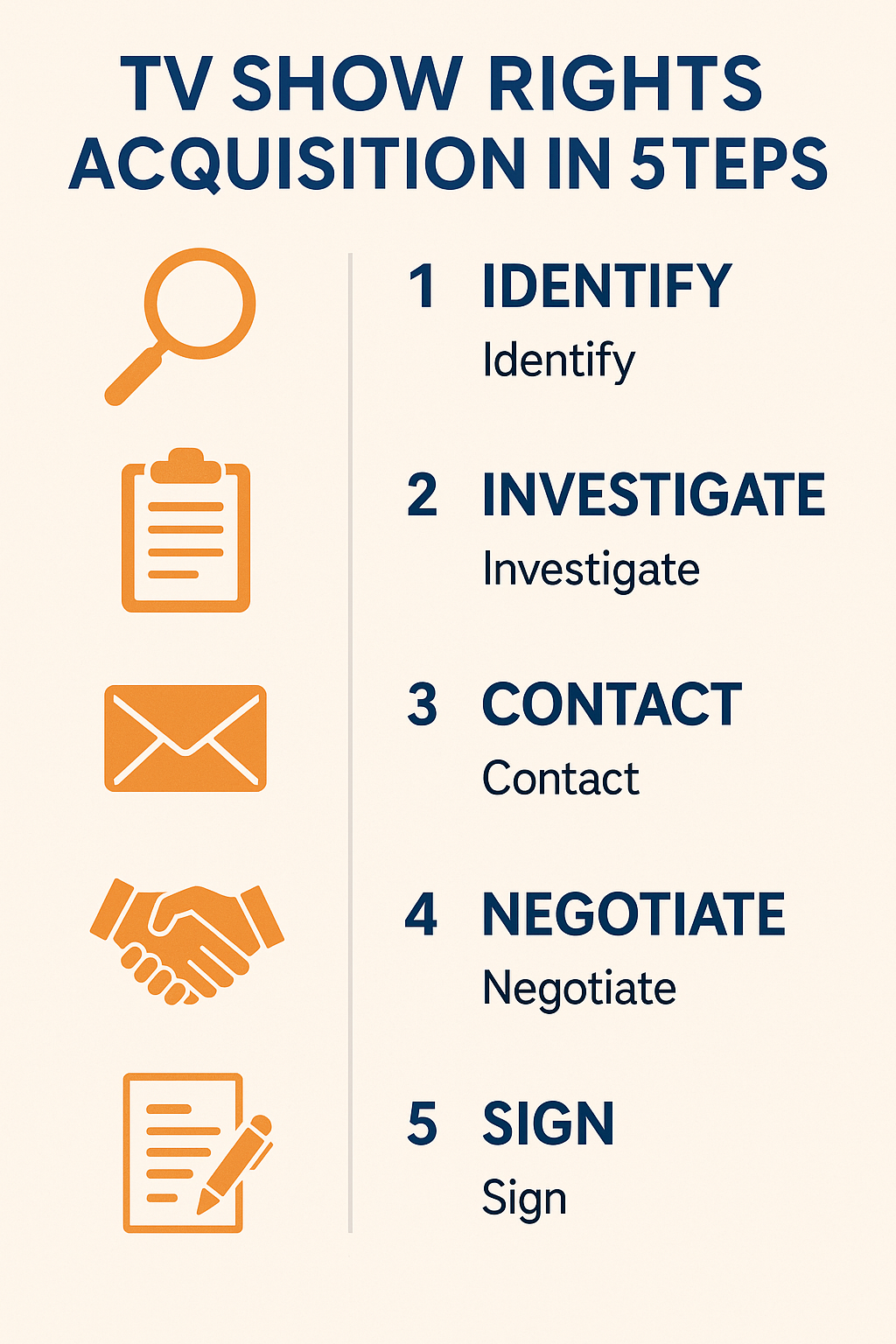
Imagine you find a gripping drama series that would be a hit on your regional streaming platform. You want to air it—but you can’t just download it and go live. Why? Because the rights to that TV show are a form of intellectual property (IP), and someone else owns them. So how can we buy TV show rights?
Buying TV show rights doesn’t usually mean purchasing full ownership of the show. Instead, it often involves licensing some or all of the IP rights from the legal owner. This lets you use the show in specific ways—like streaming it, adapting it into a new format, or selling it to another network—but only within the boundaries of the agreement.
TV Shows: A Multi-Layered IP Structure
TV shows typically involve multiple layers of ownership, including:
- Script/IP Owner: Original writers or creators
- Production Companies: Entities that fund and assemble the show
- Networks or Distributors: Those who broadcast or stream the content
- Rights Management Entities: Agencies handling legal and licensing
Each layer may hold different rights, and your intended use (broadcasting, remaking, syndicating) will determine who you need to negotiate with. For example, if you want to create a localized remake of a British show for an Indian audience, you’ll need the adaptation rights from the rights holder—not just permission to stream the original.
Rights vs. Copyright: What’s the Difference?
These two terms are often confused, yet legally distinct:
- Copyright: A legal protection automatically granted to the creators of original works—including scripts, music, and footage. It defines who owns the work.
- Rights: The practical permissions granted—usually through licensing—to use, distribute, reproduce, or adapt the copyrighted material.
In simpler terms: copyright is the cake; rights are the slices the copyright owner can serve (or sell) to others.
Say you want to use a popular show’s footage in a documentary. You don't need to buy the entire copyright—you just need to license the clip for your use case. Rights can be:
- Exclusive or Non-Exclusive
- Time-limited or Perpetual
- Bound by geography (e.g., U.S.-only)
- Format-specific (e.g., streaming vs. theatrical distribution)
Understanding these differences—and the layered structure of ownership—is the first step to making a legitimate, profitable move in the world of TV content.
Types of TV Show Rights You Can Acquire
When you're looking to acquire a TV show—whether to stream it, air it, remake it, or resell it—understanding the different types of rights is crucial. Each category allows distinct uses and comes with its own legal guardrails. Choosing the right kind of rights can make or break your project's success.
Broadcasting & Streaming Rights
If your goal is to show an existing TV show on your platform or channel, these are the rights you need. They let you air the program to a defined audience over a set duration.
- Exclusive vs. Non-exclusive: Exclusive rights mean you're the only platform airing it in a given market. Non-exclusive allows multiple outlets.
- Fixed-term: Often time-limited and renewable.
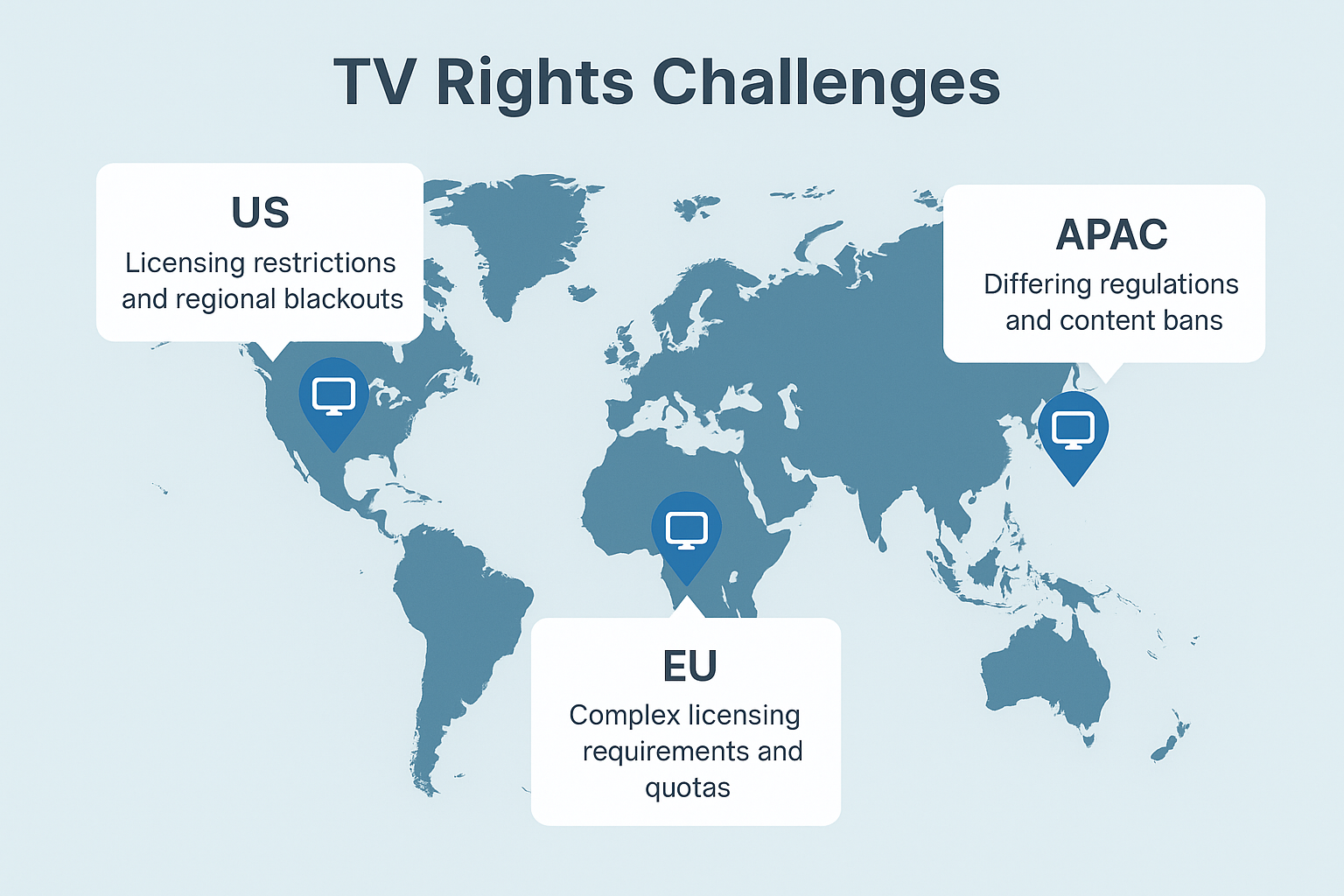
- Territorial limits: Many licenses are country- or region-specific.
Adaptation & Remake Rights
Want to localize or reboot a show? Adaptation or remake rights allow you to recreate the concept in a new language or cultural context.
- Scripted format rights: Popular in reality shows and scripted series.
- Localization clauses: Govern how much creative flexibility you have.
- Creative control: Rights holders may require approval on key changes.
Distribution & Syndication Rights
These rights allow you to sublicense or resell shows to other platforms, generating long-tail revenue across markets and formats.
- First-run syndication: For shows airing in a new market for the first time.
- Off-network syndication: For reruns or secondary platform licensing.
- Format resale: Includes rights for dubbed/subtitled versions, or distribution on flights, hotels, etc.
Comparison of TV Rights Types
| Rights Type | Allowed Usage | Common Buyers |
|---|---|---|
| Broadcasting & Streaming | Airing on TV or digital platforms, time-limited | TV networks, OTT services, streaming platforms |
| Adaptation & Remake | Turning the original into a local version | Production studios, international broadcasters |
| Distribution & Syndication | Re-selling or sublicensing globally | Media distributors, cable channels |
How Much Do TV Show Rights Cost?
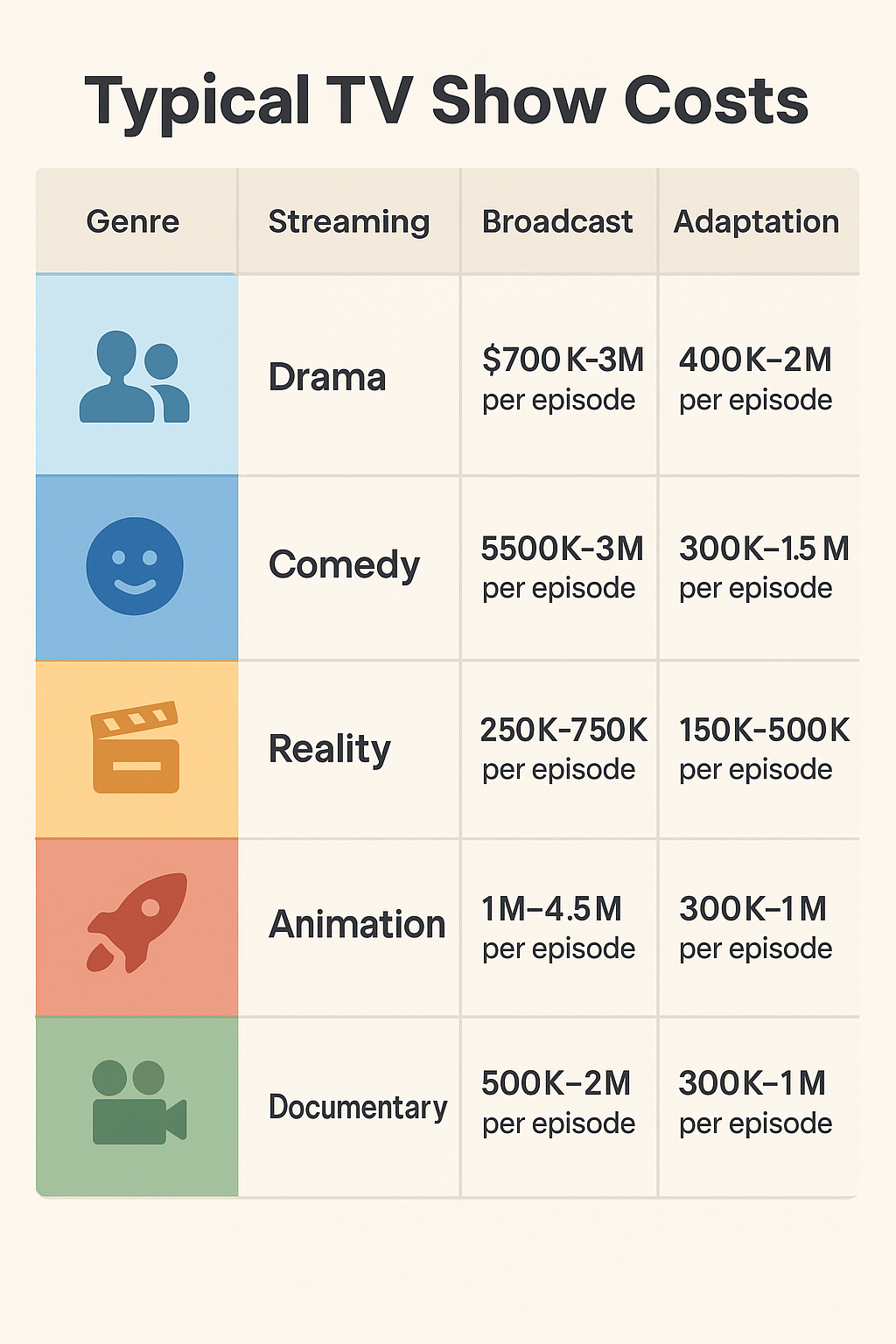
Whether you're eyeing a classic sitcom, a trending documentary, or an international drama to license, one of your biggest questions will be: how much will it cost? The truth is, there’s no flat answer. The price of TV show rights varies wildly depending on genre, licensing type, and multiple other variables.
Pricing Ranges by Genre: Sitcoms, Documentaries, Dramas, Reality Shows
While pricing is usually negotiated case by case, here are general ballpark figures by genre:
| Genre | Estimated Cost (Per Episode) | Notes |
|---|---|---|
| Sitcoms | $5,000–$40,000 | Higher for popular or nostalgic classics |
| Documentaries | $2,000–$12,000 | Depends on topic, production value, and exclusivity |
| Dramas | $10,000–$100,000+ | High cost due to production budgets and demand |
| Reality Shows | $4,000–$25,000 | Franchise rights may exceed this range |
Factors That Affect Cost: Exclusivity, Region, Format, Duration
The genre might give you a starting point, but the final price depends on your licensing specifications. Key variables include:
- Exclusivity: Exclusive rights can double or triple the cost.
- Region: Global licenses cost far more than single-territory ones.
- Format: Adaptation/remake rights command higher prices, especially for reality franchises.
- Duration: Longer licenses (e.g., 10-year or perpetual) cost more than 1-year terms.
TV Rights Cost Matrix by Genre and Licensing Type
| Genre | Non-Exclusive Streaming (Per Ep) | Exclusive Broadcast (Per Ep) | Adaptation Rights (One-Time) |
|---|---|---|---|
| Sitcom | $5,000–$10,000 | $12,000–$30,000 | $50,000–$150,000 |
| Documentary | $2,000–$7,000 | $5,000–$15,000 | $10,000–$40,000 |
| Drama | $8,000–$25,000 | $18,000–$100,000 | $75,000–$300,000+ |
| Reality Show | $3,000–$9,000 | $10,000–$25,000 | $40,000–$200,000+ |
Where & How to Find TV Show Rights for Sale
Finding TV show rights to buy or license doesn’t have to be a black box. From online marketplaces to trade events and agency contacts, several options can connect you directly with rights holders. This section walks you through the most reliable ways to locate TV content with rights available for acquisition—so you can go from idea to deal faster.
Online Licensing Marketplaces
- Vuulr: 45,000+ titles, advanced filters, match-and-make features.
- RightsTrade: A high-trust network of 30,000+ media professionals.
- MIP Markets Digital Library: Access content linked to global expos.
Trade Events & Industry Platforms
- NATPE: Key U.S. and Latin American deals often originate here.
- Content London: Europe’s best formats and fresh IP launches.
- MIPCOM: Global hub in Cannes—massive opportunity for in-person networking and closing deals.
Agencies, Guilds, & Legal Firms
- Talent Agencies: CAA, WME, and ICM often manage high-profile IP deals.
- Guilds: WGA or PGA can help trace rights holders via creator affiliations.
- Entertainment Law Firms: Experts in chain-of-title research and rights negotiation.
Platform Comparison Table
| Platform | Filters Available | Listing Fees | Buyer Access | Key Strength |
|---|---|---|---|---|
| Vuulr | Genre, Territory, Duration, Language | Free to search, commission on deal | Global buyers & sellers | Largest volume of titles |
| RightsTrade | Region, Format, Deal Type | Subscription + commissions | Indie & studio professionals | High-trust network |
| MIPCOM Digital | Company, R
Buying TV Show Rights Isn’t Just for Media Giants — You Can Do ThisYears ago, independent producer Alex stumbled upon an out-of-print British crime drama from the ’90s. It wasn’t just nostalgia—he saw real commercial value in adapting it for streaming. What stood between him and a potential hit? Licensing the rights. Fast forward to today, and Alex isn’t alone. Dozens of indie creators and small production teams are successfully acquiring and monetizing TV show rights—all because they knew where to look and what steps to follow. Here’s the truth: Licensing TV show rights is no longer reserved for big-name studios. With the right knowledge and tools, you can identify, negotiate, and legally acquire content rights—no law degree or million-dollar budget required.
Stat: Over 35% of streaming platforms’ libraries are filled with licensed
third-party content. (Source: Ampere Analysis)
What You'll Gain from the Right Guidance & Tools
Pro Tip: Use databases like Rightsline or Rightsdesk to verify title
availability before contacting any rights holder.
Let’s Help You Get StartedWe’ve created a downloadable checklist covering every critical step:
👋 Ready to move forward?
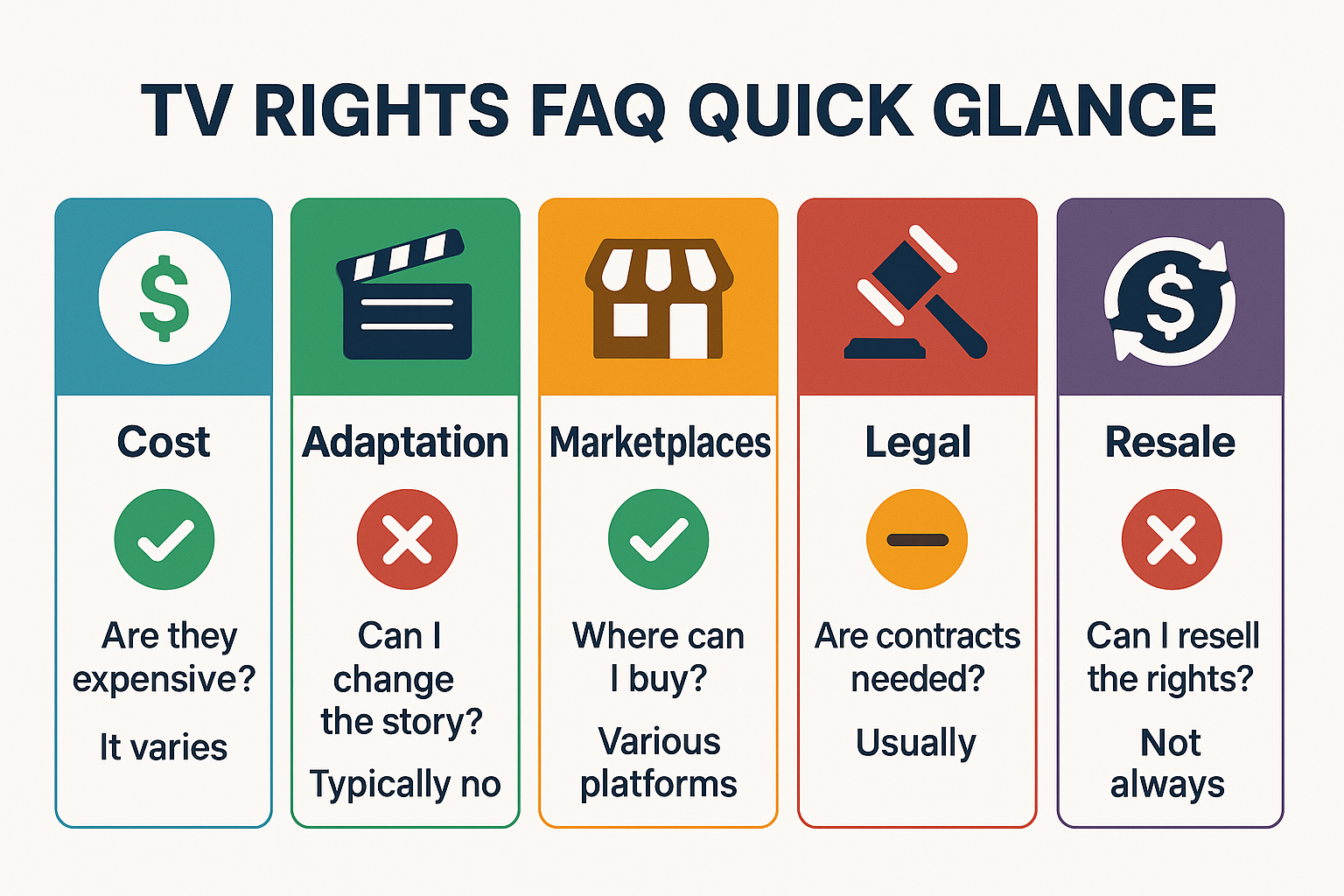
FAQ: Buying TV Show Rights – Your Questions AnsweredQ1: How much does it cost to buy the rights to a TV show?It depends on show popularity, exclusivity, and region. Ranges can go from a few thousand to millions:
Pro Tip: Review revenue shares and bonuses—flat fees are only one part of the deal.
Q2: Can I remake a TV show once I purchase the rights?Only if your agreement includes adaptation or derivative rights. Q3: Where can I find shows with rights available?
Pro Tip: Confirm chain of title—don’t rely solely on platform listings.
Q4: What kind of lawyer should I hire?An entertainment lawyer with licensing/IP experience. Q5: Can I resell or sublicense my rights?Yes—if your agreement permits sublicensing or transfer.
Example: A LATAM distributor sublicensed an Australian drama to
3 OTT channels—recouping their cost in six months.
|