1. Introduction to Selling Movie Rights
1.1. Selling Your Film Rights in 2026
Selling your film rights can be the most profitable - or legally dangerous - decision you make this year. Maybe you’ve poured your heart into an indie short, or you’re managing programming for a school or library. Now someone’s asking, “Can we license your movie?” Or maybe you want to monetize it for broader audiences - but aren’t sure where to begin.
Unlike selling a physical product, selling your movie rights means granting access to specific parts of your creative work - performance, distribution, streaming - each with its own legal and financial implications.
If you don’t understand which rights you actually hold - or how to license them properly - you risk losing control of your work or facing costly legal disputes.
What You’ll Learn in This Guide
- The types of film rights you may own (and how to verify them)
- Where and how to legally sell or license your movie rights in 2026
- How much you can realistically earn - and the red flags to avoid
- Trusted platforms you can work with (MPLC, Swank, Filmhub, etc.)
This guide is built for both first-timers and experienced creators. Whether you’re protecting your creative legacy or managing community screenings, you’ll learn how to avoid legal risk - and how to maximize the value of the rights you sell.
1.2. Navigating Movie Rights & Licensing in 2026
Confused by licensing terms, legal gray areas, or where to start? You’re not alone. The world of movie rights for sale is filled with fine print, vague definitions, and overlapping regulations - even for professionals.
You might be asking:
- What exactly am I allowed to sell?
- Do I need a license, or am I transferring ownership?
- Is it legal to screen a film I bought the rights to - in a school or at a fundraiser?
Here’s the truth: Owning a copy of a movie does not mean you own the rights to show, stream, or sell it. That’s where confusion - and costly mistakes - begin.
According to the Motion Picture Licensing Corporation (MPLC), over 80% of unauthorized public showings in the U.S. stem from unintentional violations by schools, libraries, and nonprofits - not piracy or theft.
Whether you’re managing programming for a school or trying to sell your independent film to a distributor, this guide will clarify what rights you hold, what’s legal to sell, and how to protect yourself from liability.
1.3. Your Step-by-Step Guide to Selling Movie Rights
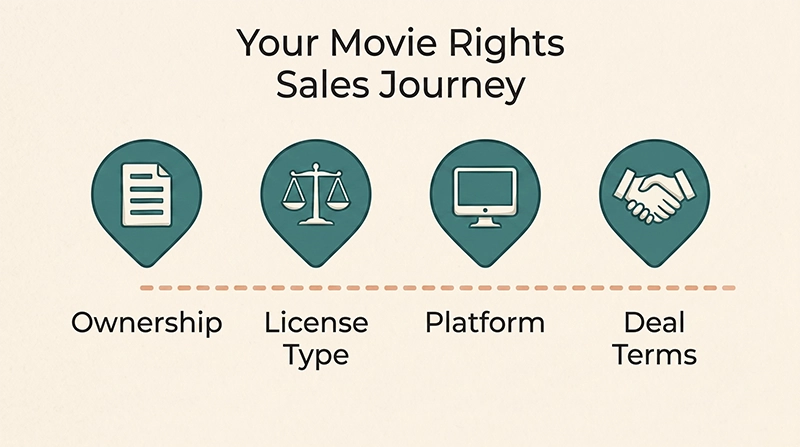
If you’ve ever searched “movie rights for sale” and ended up more confused than when you started, this guide is exactly what you need. We break everything down step by step - no legal degree required. You’ll discover:
- What types of movie rights exist (and which ones you actually own)
- The legal process to license or sell them without getting burned
- Which platforms to trust - and which to avoid
- How much your film rights are really worth in 2026
You don’t need to make that mistake. This guide will help you license confidently and profit responsibly.
By the end of this article, you’ll know:
- How to check if you even have the rights to sell
- Where to sell movie rights (including public performance, streaming, and international licenses)
- How to structure the deal to protect your work
- What “blanket license,” “title-by-title,” and “revenue share” models really mean
This isn’t theory. It’s practical, experience-backed advice written for creators, librarians, programmers, and anyone who wants to sell film rights the right way - without losing control or income.
1.4. Movie Rights for Sale: The Most Trusted Guide of 2026
You deserve more than vague blogs and outdated legal advice when searching for movie rights for sale. That’s why this guide was created - not by AI alone or anonymous writers, but in collaboration with:
- Entertainment lawyers specializing in intellectual property
- Film licensing consultants with real marketplace experience
- Programming directors from schools, libraries, and nonprofit networks
That won’t happen to you. This guide pulls from:
- Current data from Filmhub, MPLC, and Swank
- U.S. copyright law basics explained by legal experts
- Case studies and breakdowns tailored for non-lawyers
If your goal is to license responsibly, protect your content, and still get paid - this is the most reliable starting point. No fluff. No legalese. Just clear steps, verified facts, and expert-backed recommendations.
2. Understanding Movie Rights and Licensing
2.1. What Are Movie Rights?
When people talk about "movie rights for sale," they’re usually referring to one or more specific rights attached to a film - not the entire film itself. These rights determine who can show, distribute, stream, or sell your movie - and in what context.
Understanding what you can sell starts with knowing what rights you own.
A Breakdown of Rights:
- 1. Distribution Rights: Allows third parties to distribute the film (DVD, theaters, digital). Can be exclusive or non-exclusive. Often split by region.
- 2. Performance Rights: Enables public screening in schools, churches, libraries. Required even for free events. Often managed through blanket licenses.
- 3. Broadcast Rights: Right to air your film on cable or satellite TV. Includes syndication, pay-per-view, educational TV.
- 4. Streaming Rights: Covers platforms like Netflix, YouTube, Filmhub. Includes AVOD, SVOD, TVOD models. Can be highly lucrative if properly structured.
2.2. Different Types of Licensing Models
Before putting your movie rights for sale, you need to understand how different licensing models function. The wrong model could limit earnings - or expose you to risk.
Blanket License vs. Title-by-Title vs. Digital Screening Rights
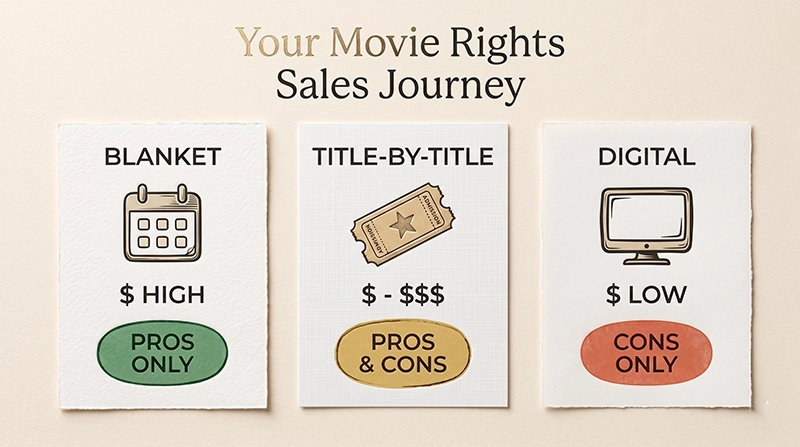
- 1. Blanket License: Annual fee for unlimited public showings. Popular with schools, libraries, churches. Offered by MPLC and Swank.
- 2. Title-by-Title License: One-time license per film, per event. Ideal for film clubs, special events. Price varies by film and venue.
- 3. Digital Screening Rights: Access via stream/download on a platform. Supports AVOD, SVOD, TVOD. Can include geofencing and time limits.
Public vs. Private Screening Rights
- Public Screening = Any showing outside the home or beyond close friends/family. Requires a license. Includes classrooms, fundraisers, film nights.
- Private Screening = At home or invitation-only. No license required. Protected under Section 106 of U.S. Copyright Law.
Licensing Models Comparison Table
| Model | Best For | Cost Range | Key Features | Licensing Source |
|---|---|---|---|---|
| Blanket License | Schools, libraries, churches | $250-$1,000/year | Unlimited showings from a set catalog | MPLC, Swank |
| Title-by-Title | Special events, festivals | $75-$500/showing | One-time rights for a single film | Direct from rights holder |
| Digital Screening | Educational streaming, VOD | Varies | Stream/download rights + geofence controls | Filmhub, Indie Rights |
3. Platforms and Marketplaces for Selling Movie Rights
3.1. Where to Sell or License Your Movie Rights Online
Listing your movie rights for sale online is easier than ever - but only if you know where to go. The right platform can help you find the perfect buyer, get paid fairly, and stay protected legally. The wrong one? It might bury your film or tie you up in a contract that limits future opportunities.
The Top Marketplaces in 2026
- MPLC (Motion Picture Licensing Corporation)
Specializes in blanket licenses for public performance. Does not buy content - licenses existing catalogues. - Swank Motion Pictures
Title-by-title and blanket licensing. Strong in education, prisons, and healthcare. - Filmbankmedia (UK)
Theatrical and non-theatrical licensing worldwide. Great for screenings outside the U.S. - CCLI
Christian licensing for churches and faith-based events. - Filmhub
Indie-friendly global streaming distribution. AVOD, SVOD, TVOD rights marketplace.
3.2. How the Movie Rights Exchange Model Works
Think of the “movie rights exchange” as a digital marketplace - like Airbnb, but for intellectual property. Here’s how it works:
- You list your film: Include metadata, trailer, rights offered. Choose pricing: flat fee, revenue share, or time-limited.
- Buyers browse listings: Schools, streamers, or distributors filter by genre, license type, region.
- Transactions are completed digitally: Contracts, payments, and tracking built-in. You retain control and can unlist anytime (terms apply).
This model is growing fast because it’s creator-friendly, transparent, and scalable.
Platform Comparison Table
| Platform | Region(s) | License Types Offered | Best For | Pricing Model |
|---|---|---|---|---|
| MPLC | Global (U.S. lead) | Blanket (public performance) | Libraries, schools, nonprofits | Annual subscription |
| Swank | U.S. & Global | Title-by-title, Blanket | Schools, hospitals, prisons | Per title or annual |
| Filmbank | UK, Intl. | Public performance, theatrical | Community screenings, festivals | Flat + royalties |
| CCLI | U.S., Faith-based | Religious licensing only | Churches and ministries | Subscription |
| Filmhub | Global | Streaming (AVOD, SVOD, TVOD) | Indie creators, digital rights | Revenue share |
4. How to Buy Movie Rights for YouTube: The Ultimate Framework
Successfully getting your feature films onto the world’s biggest video platform, like YouTube, takes a deep understanding of digital rights management. When you acquire movie rights for YouTube, you’re dealing with a mix of traditional film distribution and the platform’s fast-moving, algorithm-driven rules. Because of these challenges, working with a top-tier Multi-Channel Network (MCN) like Wedia Corp has become the go-to move for serious distributors and channel owners.
4.1. Why Securing a Commercial Movie License for YouTube is Non-Negotiable
YouTube uses one of the most advanced automated copyright systems out there—Content ID. Uploading a feature film, documentary, or short film without a clear, written movie license is a surefire way to face demonetization, copyright strikes, or even permanent channel termination.
Simply buying a movie or subscribing to a streaming service doesn’t give you the right to broadcast publicly. To avoid trouble and legally establish ownership of your digital distribution rights on YouTube, you need a commercial B2B license. This clears you to bypass the system’s flags and ensures your channel stays protected.
4.2. YouTube as an AVOD Platform: Understanding Digital Distribution Rights
It’s crucial that your licensing agreement clearly states that you have “ad-supported monetization rights on user-generated content (UGC) platforms.” A generic Video on Demand (VOD) license won’t cut it legally. Your contract needs to specifically include YouTube, giving you the legal ability to make ad revenue without stepping on any existing agreements the licensor has with SVOD (like Netflix) or TVOD (like Amazon Prime Video) platforms.
Step-by-Step: Sourcing and Clearing Rights with an MCN
Acquiring profitable intellectual property (IP) requires a smart, focused approach. Instead of blindly navigating the fragmented independent film market, savvy channel operators turn to top-tier networks to make the process easier and more efficient:
1. Source the Content: Connect directly with independent producers, global sales agents, or leverage a premium network like Wedya Corp. An established MCN acts as a bridge between valuable IP owners and YouTube creators, giving you access to carefully vetted content that’s already been through its main distribution windows.
2. Verify the Chain of Title: Before finalizing any agreement, always check for a clean Chain of Title. This ensures that the seller actually holds the rights to the content for AVOD use and hasn’t already given exclusive digital distribution rights to another party.
3. Negotiate the Terms: Structuring a movie license for YouTube usually involves a flat-fee buyout (Minimum Guarantee) or a revenue-share model based on AdSense performance. Partnering with a strong MCN like Wedya Corp often gives you the leverage to secure better revenue splits and higher ad rates.
4.3. Post-Acquisition: Whitelisting, Geo-Blocking, and Maximizing ROI with Wedya Corp
Channel Whitelisting & Content ID:
As soon as you sign the agreement, your channel needs to be "whitelisted." When you partner with Wedya Corp, their advanced Content Management System (CMS) takes care of this for you. They protect your uploads from automatic copyright claims and actively monitor your licensed content across YouTube, making sure you’re claiming revenue from any unauthorized re-uploads by third parties.
Geo-Blocking and Territorial Rights:
Film distribution rights are usually sold by territory. If your license is limited (for example, North America and the UK only), you’ll need to use geo-blocking to restrict access to specific regions. Wedya Corp's infrastructure ensures your content stays within those regional boundaries, protecting you from contract breaches and preventing geographic copyright strikes on your channel.
Ready to Scale Your YouTube Film Distribution?
Navigating complex licensing agreements, Content ID issues, and AVOD monetization doesn’t have to slow you down. Whether you're looking to acquire top-tier movie rights or need expert digital rights management to protect and monetize your existing catalog, Wedya Corp offers all-in-one infrastructure to help you succeed in the YouTube film market.
5. How to Sell Your Movie Rights Legally
5.1. Step-by-Step Guide
Step 1 - Identify Which Rights You Own
Before listing anything, you must know exactly what you're allowed to sell.
- Did you fund the production, or was it a collaboration?
- Is there a contract that names you as the rights holder?
- Have any rights already been sold or optioned (even temporarily)?
Step 2 - Choose the Right Licensing Model or Platform
Match your rights with the correct licensing model. Your goal and audience determine whether you pursue:
- Blanket license deals (for libraries and schools)
- Title-by-title licenses (for festivals and limited events)
- Streaming platforms (for monetized access: AVOD, SVOD, TVOD)
Choose the right platform:
- Filmhub - streaming & global reach
- MPLC or Swank - institutional licensing
- Filmbank - theatrical & community screenings
- Direct licensing - for custom or one-off deals
Step 3 - Prepare Your Pitch Deck & Licensing Terms
- Synopsis + trailer
- Your unique selling points (e.g., awards, premieres, social impact)
- List of available rights (territory, duration, exclusivity)
- Sample license agreement or basic terms
Step 4 - List and Negotiate
If using a platform like Filmhub:
- Upload metadata and required assets
- Tag film by genre, region, and rights offered
- Set pricing or use default terms
If dealing directly:
- Use a lawyer-reviewed license agreement
- Clarify exclusivity, payments, and limits
- Don't hesitate to walk away from bad terms
5.2. Real-World Use Cases
Case Study: Library Licenses Indie Films
In 2023, Springfield Public Library (Illinois) wanted more diverse media. Through Filmhub, they licensed a batch of short films on climate, mental health, and social justice.
- Paid $1,200 for a digital education blanket license
- Accessed 15 short films for library + classroom use
- Each creator earned an average of $80 in Q1 revenue
Case Study: Local Sale to Streaming Success
Eddie Ramos, an independent filmmaker in New Mexico, created a 12-minute drama about caregiving in Latino families. He posted his movie rights for sale on a local film licensing forum and also reached out to regional broadcasters directly.
- 1-year exclusive local TV license
- $2,000 flat fee
- Non-commercial use only
This exposure later led to a streaming deal with a Latino-focused SVOD platform - tripling his total earnings.
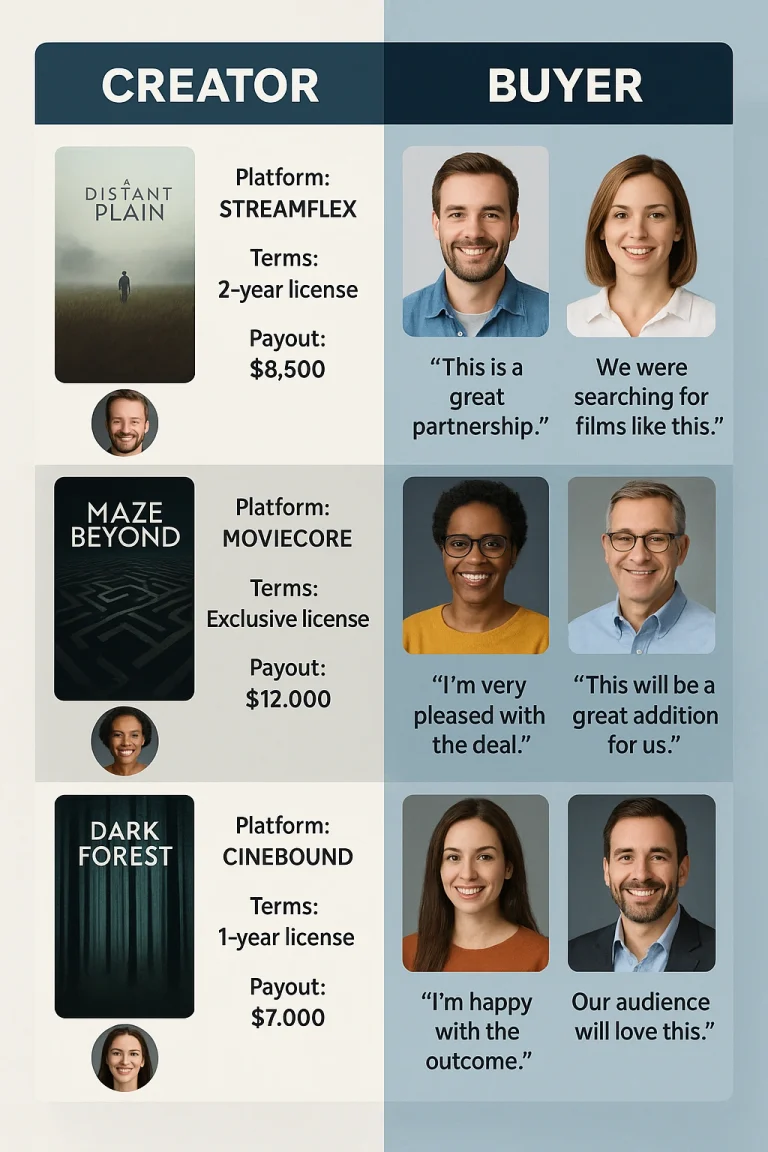
Quote Carousel: Snippets from Creators & Buyers
- Lisa Nguyen, Documentary Filmmaker
- Derek Thomas, Licensing Manager, CityReads Consortium
- Jamila Harris, Writer-Director
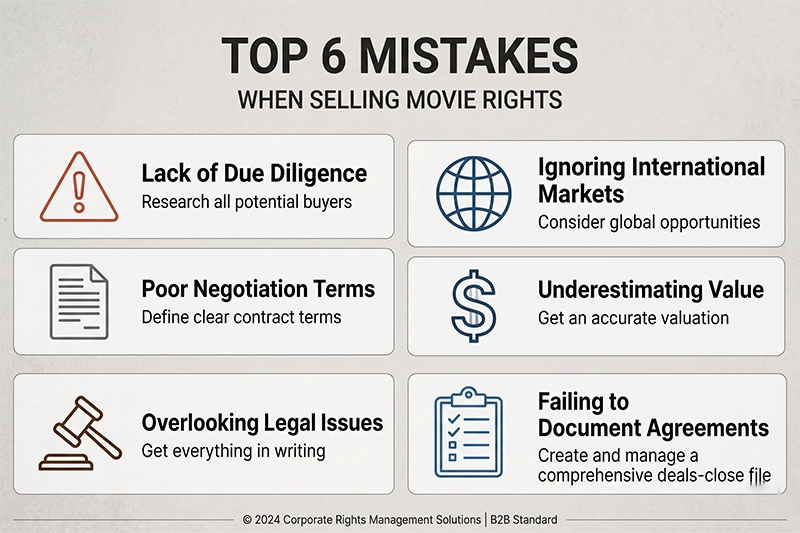
5.3. Common Pitfalls When Selling Movie Rights (And How to Avoid Them)
Selling your movie rights can open exciting doors - or land you in serious legal trouble if done carelessly. Here are the most common traps - and how to avoid each one.
No Legal Review of Contracts
One of the costliest mistakes is signing licensing agreements without legal review. Even simple contracts may contain:
- Broad exclusivity clauses
- Automatic renewals
- Unclear territory or platform definitions
Selling Rights You Don’t Own
You can’t sell what you don’t fully own - yet many creators overlook this.
- Was the script adapted from a book or article?
- Were there co-producers or investors?
- Did you use any licensed music, stock footage, or visuals?
5.4. Understanding Territory and Platform Rights
It’s easy to overlook fine print about where and how your film can be shown. A buyer might say “global streaming,” but do they mean:
- Just YouTube?
- AVOD and SVOD?
- Educational platforms in Asia?
- Free access in libraries?
Still Unsure? Compare Licensing Companies Side-by-Side
Choosing the right licensing partner can make or break your success when putting your movie rights for sale. Each company operates under different rules - and some are better suited to educational institutions, while others specialize in indie distribution or faith-based content.
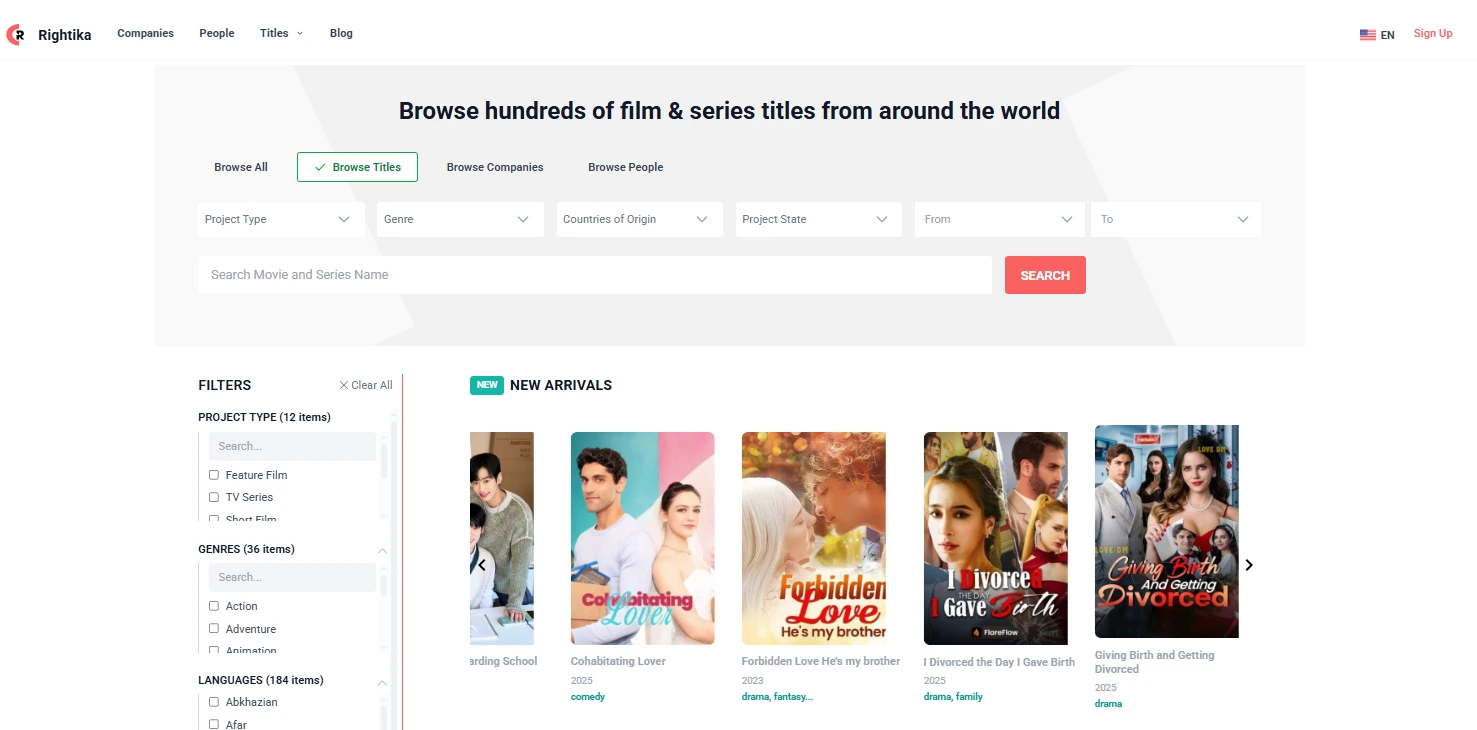
In Rightika we provide opportunities to market your films and get it in the hands of the perfect buyers.
6. FAQ: Selling Movie Rights - What You Need to Know
Can I sell movie rights if I only co-produced the film?
It depends on your contract. Co-producers often share ownership, but that doesn’t automatically give each person the right to sell or license independently.
What is the difference between a license and a rights sale?
A license is temporary - it grants use for a specific period, region, or purpose.
- License = Rent
- Sale = Transfer of ownership
How do I know how much to charge for my movie rights?
Pricing depends on:
- Type of rights (performance, streaming, theatrical)
- Territory and expected audience size
- License length and exclusivity
- Platform type (commercial vs. nonprofit)
Start by reviewing similar films on platforms like Filmhub or consulting with a distributor.
What happens if I sell rights I don’t fully own?
You risk:
- Deal cancellations
- Legal consequences and financial penalties
- Loss of trust from platforms and buyers
Do I need a lawyer to license my film?
Technically, no - but it’s highly recommended for:
- Exclusive or multi-year deals
- International or multi-platform rights
- Festival, broadcast, or VOD agreements
A lawyer ensures your rights, territory, duration, and revenue splits are clear and protected.