Movie Copyright Laws Explained: The Complete 2025 Guide for Filmmakers and Creators
Using Movie Clips? Know the Copyright Risks First
Thinking of using a clip from a classic film or remixing footage for YouTube? Wait—do you actually own the rights?
It’s a question that haunts creators every day—one that can make or break a project. Whether you're planning to include a five-second snippet in your documentary or re-edit old film scenes into a modern short, there’s one invisible wall that can derail your entire production: movie copyright.
The Problem
You’re not alone in this. Independent filmmakers, YouTubers, digital storytellers, even creative agencies—millions of creators worldwide find themselves unsure of what’s legal to use and what might trigger a takedown or lawsuit.
- Is the film you’re using in the public domain?
- Can you rely on fair use?
- Who actually owns the rights—and how do you contact them?
Let’s be real: one copyright strike can ruin your channel. One legal claim can pull your short film from a festival overnight. And worst of all, most of the guidance out there is either:
- Written for lawyers, not creators.
- Scattered across Reddit threads and PDFs.
- Or flat-out wrong.
What You’ll Gain from This Guide
This isn’t just another definition of movie copyright. It’s a complete, creator-focused breakdown that covers:
- How long movie copyright lasts (with U.S. and international comparisons).
- How to check if a film is in the public domain (including a step-by-step guide).
- What fair use actually protects—and what it doesn’t.
- How to license a movie or scene legally, including fees and contacts.
- What to do if your content gets flagged, claimed, or removed.
And it doesn’t stop there. You’ll also get:
- A downloadable copyright status checklist.
- Comparison charts for international copyright laws.
- Real-world case studies from creators like you.
In 2021, a small documentary filmmaker uploaded a tribute montage using 1930s film footage she believed was public domain. It wasn’t. The original distributor filed a takedown, and her YouTube channel was demonetized for 30 days. A simple check of the copyright catalog could have saved her.
Don’t just check if the film is old—check if the music, script, and performance rights are also cleared. Many films have expired copyrights for the visuals but not the soundtrack or screenplay. Always verify all layers of IP.
How to Buy Distribution Rights for Movies
You found the perfect film—but now what? Without the rights, you can’t stream it, screen it, or sell it.
Let’s say you’re launching a niche streaming platform. You discover a brilliant indie drama from South Korea that perfectly fits your brand. You’ve got the audience. You’ve got the tech. But what you don’t have—yet—are the distribution rights. And without them, your hands are legally tied.
Whether you’re a festival organizer looking to showcase global talent, a media startup aiming to license films for VOD, or a content buyer expanding a digital library, navigating the film rights ecosystem can be overwhelming.
Contracts are cryptic. Licensing terms are vague. And every misstep costs time, money, or worse—your reputation.
In this guide, you’ll learn:
- Where to find verified sellers, platforms, and licensing agents
- How to decode legal terms like “territorial exclusivity” and “revenue split”
- What to watch out for in contracts to avoid common beginner traps
- Real examples, cost breakdowns, and negotiation tips from industry insiders
You won’t be part of that statistic. This guide is here to help you make confident, smart, and fully legal acquisition decisions.
What Is Movie Copyright? A Beginner’s Guide
What Qualifies as a Copyrighted Film?
A movie is automatically copyrighted the moment it’s fixed in a tangible medium—that means once it’s recorded, saved, or stored in any format (film reel, digital file, etc.). You don’t have to register it for copyright to exist.
To qualify, a film must be:
- Original (not copied from another work)
- Creative (has some level of expression, not just factual)
- Fixed (must be recorded, not just an idea)
This includes:
- Short films, documentaries, features, animations, YouTube videos
- Even raw footage, if it shows creative direction (camera angles, scripting, etc.)
A 12-minute short film uploaded to Vimeo was later adapted into a Netflix series. Although it wasn’t formally registered, the original creator’s copyright was enforceable—and the platform paid licensing fees to avoid legal issues.
Even rough cuts or “deleted scenes” are protected. If you’re using behind-the-scenes content from another film, you still need permission.
Who Owns Movie Copyrights? (Director vs. Producer vs. Studio)
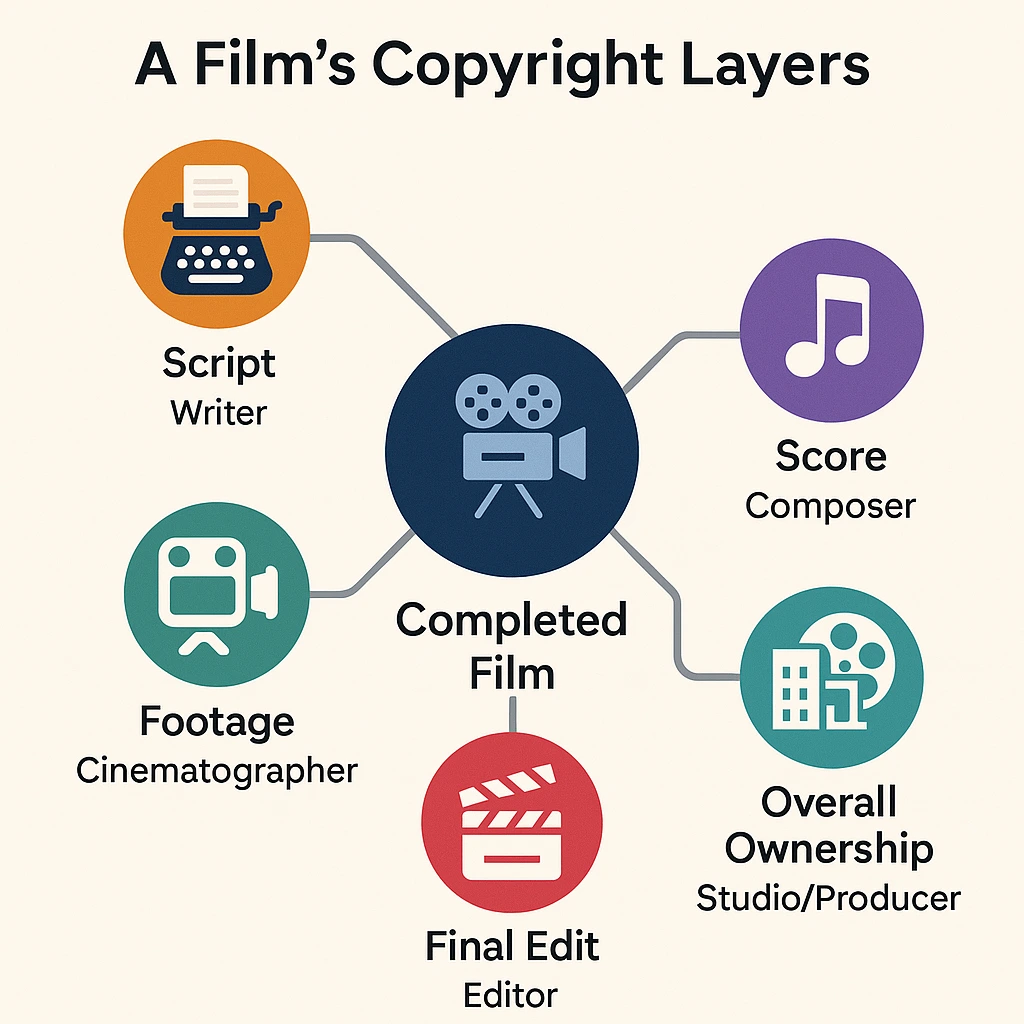
Ownership can get complicated because movies are collaborative by nature. Here’s how it typically breaks down:
- Writer owns the screenplay copyright (unless it was work-for-hire)
- Composer owns the score/music rights
- Director or Producer may own creative direction or editing rights
- Production Company or Studio usually owns the final film rights if the creators were hired
In most professional productions, rights are assigned to the studio via contract. But in indie or small-team films, copyright can remain with the individuals—unless they’ve sold or transferred their rights.
If multiple creators are involved without clear contracts, the film might be under joint ownership, meaning no one can license it independently without the others’ consent.
According to WIPO, more than 80% of copyright disputes in film arise from unclear authorship or rights assignment.
How Long Does Movie Copyright Last? (U.S. & Global Rules)
U.S. copyright duration depends heavily on when the film was created and whether it was published. Here’s a simplified breakdown:
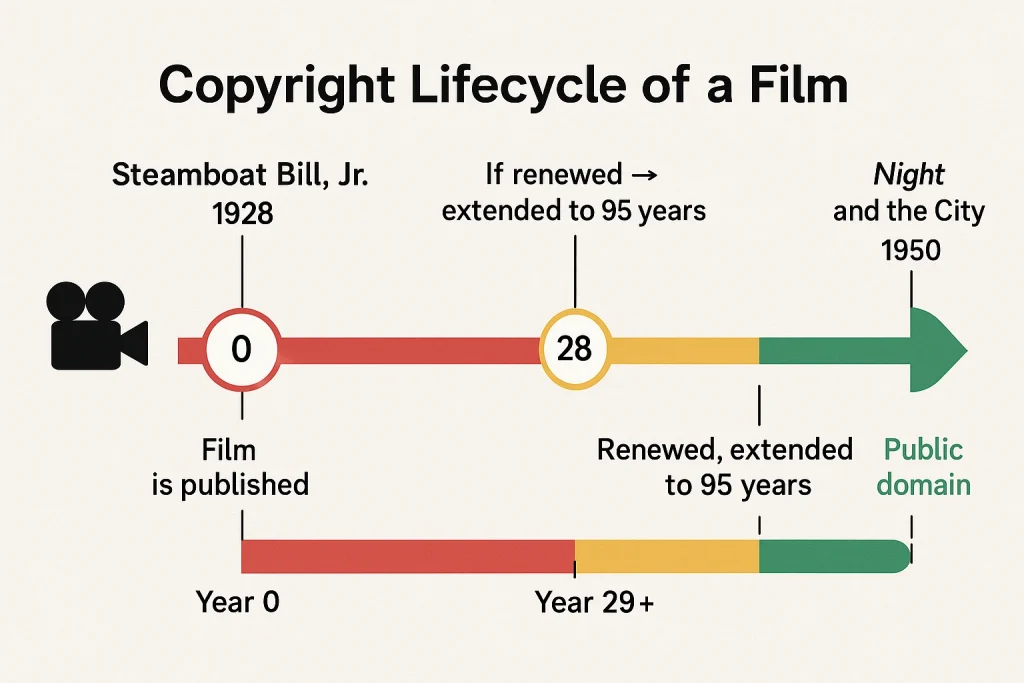
1. Films made before 1978
- Originally granted 28 years, with a renewal period of 67 years, totaling 95 years
- If not renewed properly, some fell into the public domain earlier
2. Films created in or after 1978
- Protected for the life of the author + 70 years
- For works made for hire (like studio films), the term is 95 years from publication or 120 years from creation, whichever comes first
“It’s a Wonderful Life” (1946) fell into the public domain briefly due to a lapse in renewal. But the music and story rights were still owned—so while people could broadcast the film, they couldn’t use its score or script without permission.
Always check both the film and its components (music, screenplay, footage) individually. Some public domain films still have protected parts.
How to Buy Distribution Rights for Movies
You found the perfect film—but now what? Without the rights, you can’t stream it, screen it, or sell it.
Let’s say you’re launching a niche streaming platform. You discover a brilliant indie drama from South Korea that perfectly fits your brand. You’ve got the audience. You’ve got the tech. But what you don’t have—yet—are the distribution rights. And without them, your hands are legally tied.
Whether you’re a festival organizer looking to showcase global talent, a media startup aiming to license films for VOD, or a content buyer expanding a digital library, navigating the film rights ecosystem can be overwhelming.
Contracts are cryptic. Licensing terms are vague. And every misstep costs time, money, or worse—your reputation.
In this guide, you’ll learn:
- Where to find verified sellers, platforms, and licensing agents
- How to decode legal terms like “territorial exclusivity” and “revenue split”
- What to watch out for in contracts to avoid common beginner traps
- Real examples, cost breakdowns, and negotiation tips from industry insiders
You won’t be part of that statistic. This guide is here to help you make confident, smart, and fully legal acquisition decisions.
How to Buy Distribution Rights for Movies
You found the perfect film—but now what? Without the rights, you can’t stream it, screen it, or sell it.
Let’s say you’re launching a niche streaming platform. You discover a brilliant indie drama from South Korea that perfectly fits your brand. You’ve got the audience. You’ve got the tech. But what you don’t have—yet—are the distribution rights. And without them, your hands are legally tied.
Whether you’re a festival organizer looking to showcase global talent, a media startup aiming to license films for VOD, or a content buyer expanding a digital library, navigating the film rights ecosystem can be overwhelming.
Contracts are cryptic. Licensing terms are vague. And every misstep costs time, money, or worse—your reputation.
In this guide, you’ll learn:
- Where to find verified sellers, platforms, and licensing agents
- How to decode legal terms like “territorial exclusivity” and “revenue split”
- What to watch out for in contracts to avoid common beginner traps
- Real examples, cost breakdowns, and negotiation tips from industry insiders
You won’t be part of that statistic. This guide is here to help you make confident, smart, and fully legal acquisition decisions.
International Movie Copyright Durations
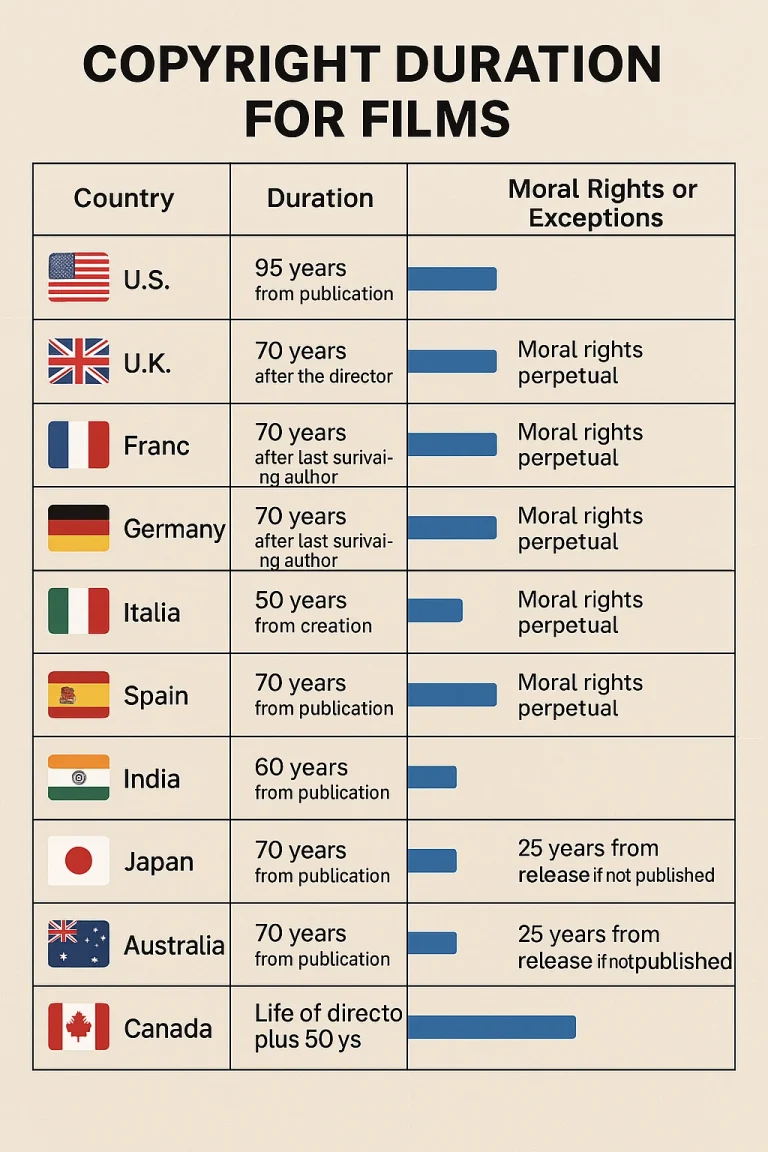
Every country has its own laws, but most follow global treaties like the Berne Convention, which sets a minimum copyright term of life of the author + 50 years.
| Country | Standard Duration | Notes |
|---|---|---|
| United States | Life + 70 years OR 95 years from publication | Depends on authorship and work-for-hire status |
| United Kingdom | Life + 70 years | Applies to main creator (e.g., director or scriptwriter) |
| Canada | Life + 70 years | Updated from 50 years in 2022 |
| France | Life + 70 years | Includes moral rights—creator must always be credited |
| Germany | Life + 70 years | In line with EU standards |
| Japan | Life + 70 years | Extended from 50 in 2018 |
| India | Life + 60 years | Posthumous duration for published works |
| Australia | Life + 70 years | Works published before 1955 may be public domain |
| Mexico | Life + 100 years | One of the strictest in the world |
| Brazil | Life + 70 years | Includes anonymous/pseudonymous works at 70 years post-use |
Over 180 countries now follow the Berne Convention, but the differences in copyright terms can make international use legally complex.
How to Buy Distribution Rights for Movies
You found the perfect film—but now what? Without the rights, you can’t stream it, screen it, or sell it.
Let’s say you’re launching a niche streaming platform. You discover a brilliant indie drama from South Korea that perfectly fits your brand. You’ve got the audience. You’ve got the tech. But what you don’t have—yet—are the distribution rights. And without them, your hands are legally tied.
Whether you’re a festival organizer looking to showcase global talent, a media startup aiming to license films for VOD, or a content buyer expanding a digital library, navigating the film rights ecosystem can be overwhelming.
Contracts are cryptic. Licensing terms are vague. And every misstep costs time, money, or worse—your reputation.
In this guide, you’ll learn:
- Where to find verified sellers, platforms, and licensing agents
- How to decode legal terms like “territorial exclusivity” and “revenue split”
- What to watch out for in contracts to avoid common beginner traps
- Real examples, cost breakdowns, and negotiation tips from industry insiders
You won’t be part of that statistic. This guide is here to help you make confident, smart, and fully legal acquisition decisions.
Can Expired Copyrights Be Revived?
No—once a movie’s copyright expires, it cannot be revived. It becomes part of the public domain, meaning anyone can use, reproduce, or adapt it legally.
However, be aware of these edge cases:
-
1. Restorations or remasters may introduce new copyrights
○ A colorized or digitally enhanced version of a public domain film can itself be protected
○ But the underlying film remains free to use -
2. Soundtrack, script, or branding might still be copyrighted
○ A film may be free, but the music used in it could still be protected -
3. Trademark law may apply
○ If a character or title is trademarked (e.g., Frankenstein, Sherlock Holmes), you might need separate permission
Don’t just search by film title—search by registration number or known rights holder to uncover renewal filings that may be missing from general results.
The U.S. Copyright Office estimates that fewer than 15% of eligible films published before 1964 were ever renewed—meaning thousands are now in the public domain.
What Is Fair Use & How Can You Use Movie Clips Legally?
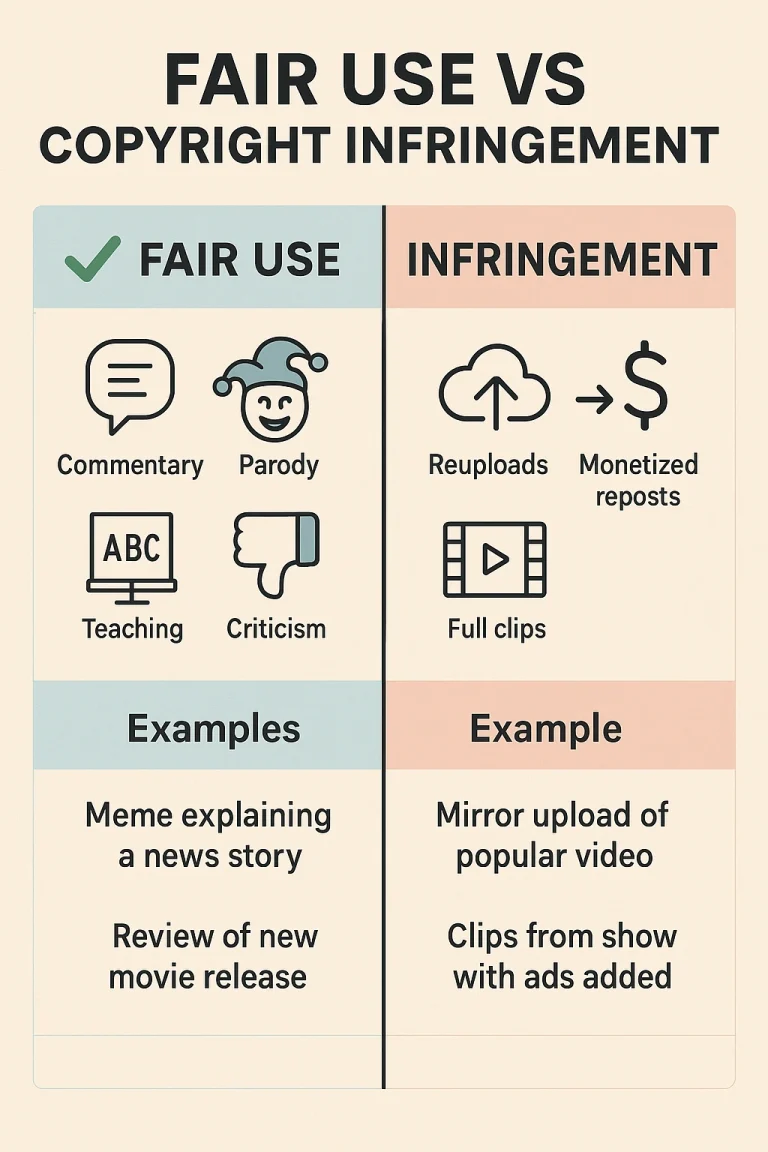
Fair use is a legal doctrine that allows limited use of copyrighted material without permission, under specific conditions. If you're using movie clips for commentary, parody, or education, fair use might protect you—but it's not guaranteed.
Courts weigh four main factors:
-
1. Purpose and character of the use
○ Transformative use (adding new meaning or message) is favored.
○ Example: A film critic adding voiceover analysis while playing a short scene. -
2. Nature of the copyrighted work
○ Factual or published works get more leeway than creative ones.
○ Example: Using a government video has more fair use protection than a Disney film. -
3. Amount and substantiality
○ Using small, non-central portions is better.
○ Example: Using 5 seconds of a fight scene—not the entire climax. -
4. Effect on the market
○ If your use replaces the original and hurts sales, it’s unlikely to be fair use.
○ Example: Reposting an entire film with subtitles will likely fail this test.
In Campbell v. Acuff-Rose Music, the Supreme Court ruled in favor of parody use—even though the new work was commercial. Why? It transformed the original meaning.
Always add your own voice, context, or commentary. The more transformative your content is, the stronger your fair use claim becomes.
What If YouTube Flags Your Fair Use Video?
Even if your use qualifies as fair use, YouTube’s algorithm doesn’t care. It uses automated Content ID to flag copyrighted material, often without nuance.
If your fair use video is flagged:
- 1. Don’t panic. It’s common—even large educational channels get flagged.
-
2. Dispute the claim
○ Explain why your video qualifies under fair use (cite the 4 factors).
○ Be specific and professional. Avoid generic messages. -
3. If rejected, appeal
○ The copyright holder must respond within 30 days.
○ If they don’t, the claim is lifted. -
4. If the takedown stands, consult a copyright attorney
○ Especially if your income or reputation is affected.
As of 2022, YouTube receives over 2 million copyright claims per week, and many of them are false positives triggered by Content ID bots.
Trim or distort the original clip slightly. A slight zoom-in, desaturation, or added commentary can help bypass detection—without misleading your audience.
How to Legally License a Movie or Scene
Who to Contact (and How to Find the Rights Holder)
Licensing a movie or scene legally means obtaining permission from the rights holder—and depending on the film, that could be more than one person or company.
-
1. Start with the production company or distributor
○ Check IMDbPro for detailed ownership and contact info.
○ Use databases like the U.S. Copyright Catalog or Variety Insight. -
2. For older films, check rights clearance agencies
○ Agencies like Cleared By Ashley, Greenlight, or WPA specialize in locating and negotiating film licenses. -
3. For music or scripts, contact composers or publishers directly
○ Rights may be split across multiple parties (e.g., Warner owns distribution, but Sony owns the soundtrack).
A short film creator wanted to use a 10-second clip from The Godfather. After contacting Paramount Pictures, they discovered that the soundtrack was licensed separately by Universal Music Publishing—two different negotiations were required.
If ownership is unclear or disputed, request a “chain of title” document—this legal paper traces copyright ownership over time and helps you avoid future liability.
Types of Licenses (Sync, Distribution, Remake, etc.)
- ● Sync License
For using movie audio or music with visuals (e.g., montage, trailer, remix) - ● Master Use License
For using the original recorded version (not just composition) - ● Distribution License
To screen or sell the movie digitally, physically, or in theaters - ● Remake/Adaptation License
To rework the story, characters, or script into a new production - ● Public Performance License
To show the film at an event, school, or public venue - ● Clip License
To use a specific scene or shot in your own production
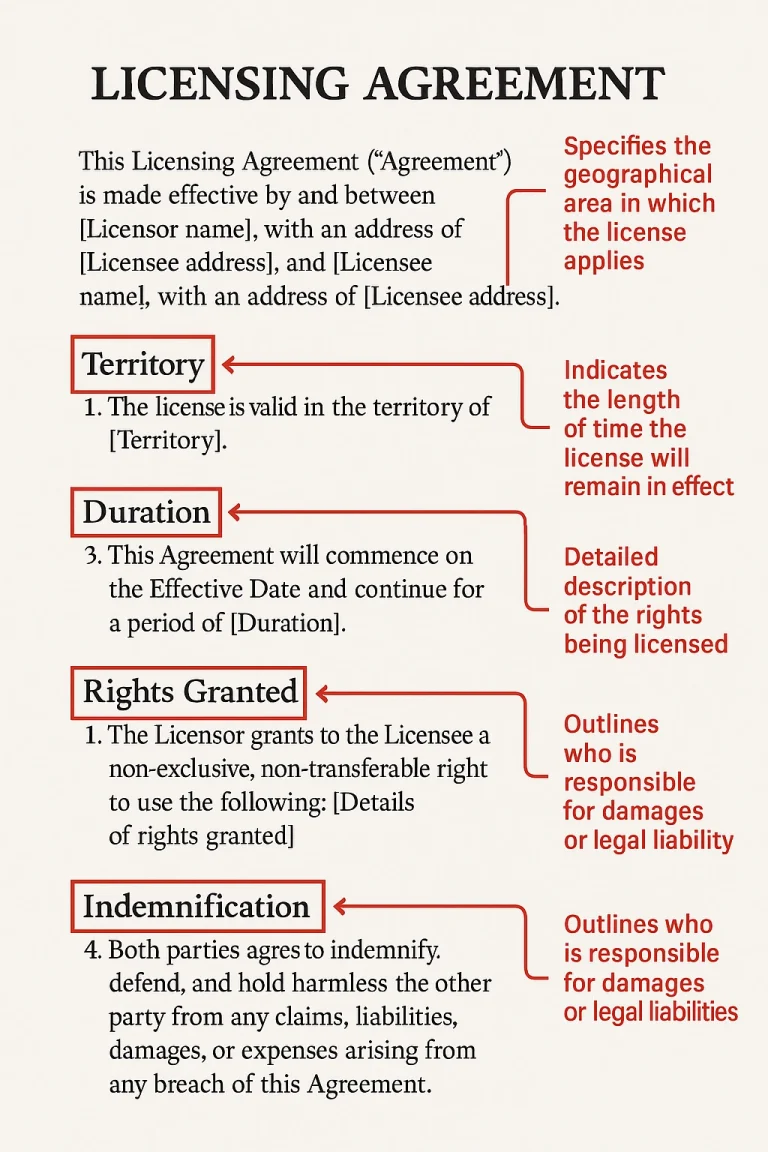
Each license outlines the medium, geography, duration, and exclusivity of your rights.
Licensing Fees: What to Expect
Licensing fees for movie copyright vary widely, based on:
- ● Duration of clip used
- ● Purpose (commercial, non-profit, educational)
- ● Distribution scale (local screening vs global VOD)
- ● Exclusivity and length of the agreement
Typical Ranges:
- ● Small indie clip (under 30 seconds): $250–$2,000
- ● Full scene from a studio film: $5,000–$25,000
- ● Full film rights for festival use: $500–$5,000
Negotiation Tips:
- ● Request a limited-use license first (e.g., 12 months, online-only) to reduce cost.
- ● Bundle rights if you need multiple elements (e.g., video + music).
- ● Always ask for a written agreement with clear limitations and indemnity clauses.
According to RightsPro, over 65% of licensing disputes arise from unclear contracts or failure to license all components (e.g., visuals but not soundtrack).
Ask for a “Most Favored Nations” clause. This ensures you’re not charged more than others who received similar usage rights.
Avoiding Copyright Strikes: What Every Creator Should Know
The Difference Between Copyright Warnings, Claims, and Strikes
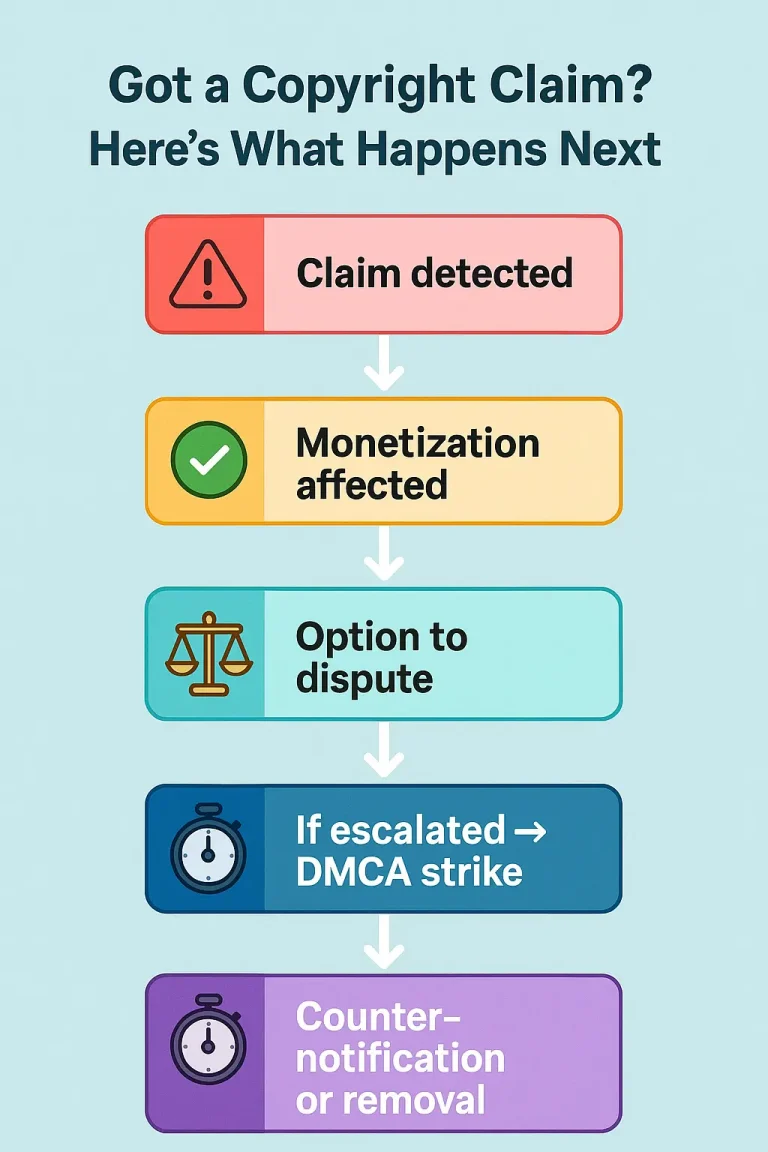
If you're a content creator using movie clips, it's essential to understand the difference between a copyright warning, a claim, and a strike. Each one affects your channel or platform presence differently.
-
● Copyright Claim:
○ Issued automatically by YouTube's Content ID system
○ Usually affects monetization (ad revenue goes to the rights holder)
○ Does not harm your channel status -
● Copyright Warning:
○ A notice that content may be at risk but hasn’t been penalized yet
○ Serves as a heads-up before further action
○ May appear if content is reported manually but not removed -
● Copyright Strike:
○ A formal legal action under the DMCA (Digital Millennium Copyright Act)
○ Can lead to video takedowns, account suspension, or even channel termination
○ Three strikes = automatic channel deletion
A gaming YouTuber used a 20-second clip from a film in a parody skit. It was flagged by Content ID (claim), but after the rights holder manually escalated it, it turned into a DMCA strike, and the video was removed.
Handling a DMCA Takedown
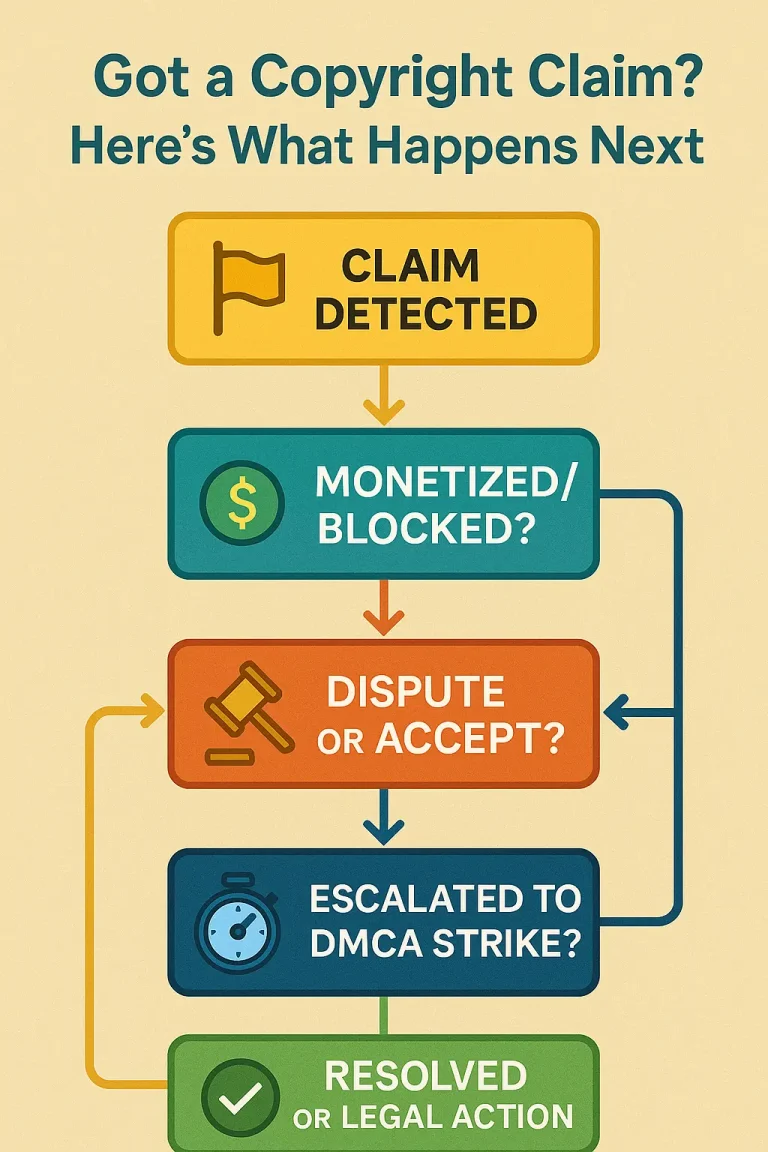
A DMCA takedown is serious—but not irreversible. If you’ve received one, follow these steps carefully:
-
1. Check the notice
○ Read the claim details. Who filed it? What content was flagged? -
2. Verify the copyright claim
○ Was it valid? Are you using the content under fair use?
○ Was the claimant the actual rights holder? -
3. Decide on a response
○ If it was a mistake or fair use, file a counter-notification
○ If you agree with the claim, you may choose to take no action—but the strike remains -
4. File a counter-notice (if applicable)
○ Submit your defense via the platform’s process (e.g., YouTube Studio)
○ Include a clear legal basis (like commentary or criticism) and contact info -
5. Wait for a response
○ The rights holder has 10–14 business days to respond
○ If they don’t take legal action, the strike is removed and your video may be restored
As of 2023, YouTube processed over 800,000 counter-notifications, and nearly half were resolved in favor of the uploader.
If your content is educational or review-based, include timestamps and citations in your description. This creates a paper trail that supports fair use if challenged later.
Can You Remove a Movie Copyright Legally?
Understanding the limits: Why "removal tools" are misleading
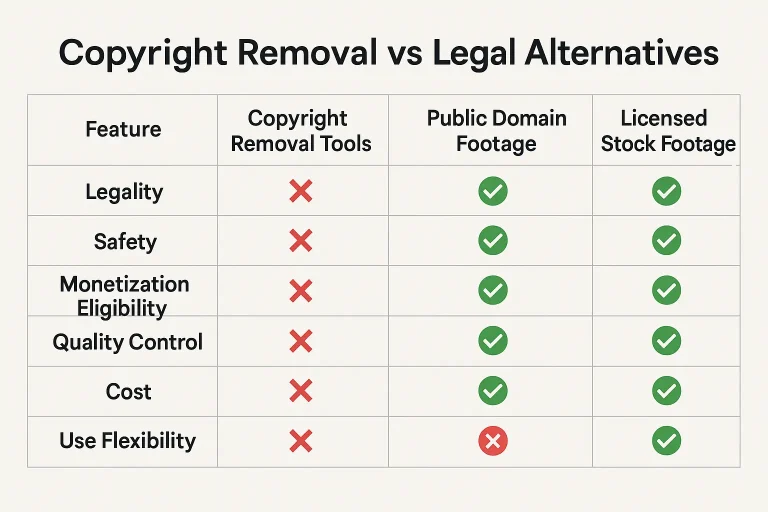
If you've searched for ways to "remove movie copyright" legally, you've likely run into shady tools or misleading promises. Let’s set the record straight: there is no legal method to erase a movie’s copyright without ownership rights or expiration.
Common myths include:
- ● Using AI to “strip” audio: Doesn’t remove copyright—it just changes the format.
- ● Editing or cropping the scene: Doesn’t protect you if the content remains recognizable.
- ● Uploading with disclaimers (e.g., “no copyright intended”): Legally useless.
A TikTok creator used a slightly sped-up version of a movie scene with a filter overlay. Although it bypassed detection briefly, the clip was still removed under a manual DMCA strike—and the creator lost monetization access for 90 days.
Any tool promising to “remove copyright” from a movie is either illegal or ineffective. If you're not the rights holder—or the content isn’t public domain or fair use—removal isn’t an option.
Using Public Domain or Licensed Stock Footage
If your project requires cinematic footage but you can’t legally clear copyrighted clips, your best bet is to work with public domain material or licensed stock.
Use public domain footage when:
- ● The film was published before 1929 and not renewed
- ● It’s listed in the Library of Congress or archive.org with verified public domain status
- ● You only need basic scenes, crowd shots, or vintage storytelling
Use licensed stock when:
- ● You need modern, high-quality footage with full legal protection
- ● Your use is commercial or monetized (e.g., YouTube ads, client work)
- ● You need royalty-free music, overlays, or animated clips
Over 2 million public domain video assets are available online—but fewer than 15% of creators leverage them regularly, according to Creative Commons.
Use stock libraries like Pond5, Storyblocks, or Artgrid, which offer affordable cinematic footage with clear license terms—far safer and often more customizable than risking a takedown.
Make Money From Movie Copyright: Strategic Use Cases
One of the most overlooked ways to generate revenue as a creator is by repackaging and distributing public domain films—legally and creatively.
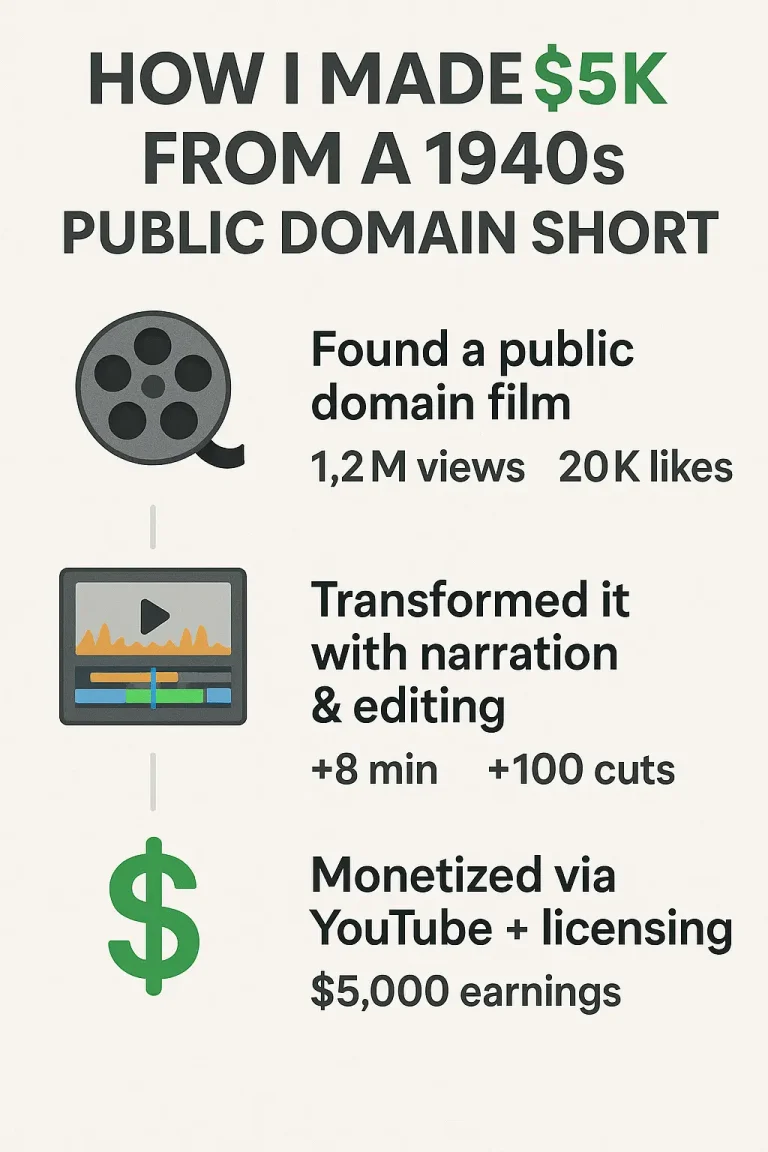
Case Study: “How I Made $5K from a 1940s Public Domain Short”
A filmmaker named Carla re-edited a 1943 short film titled The City That Never Sleeps, which had entered the public domain. She colorized it, added narration, and published it on YouTube with SEO-optimized titles and thumbnails.
Within 6 months, the video generated:
- ● Over 1.2 million views
- ● Roughly $4,300 in ad revenue
- ● Another $700 from licensing the narrated version to an education platform
Her keys to success:
- ● Verified public domain status using the U.S. Copyright Catalog
- ● Added transformative value (narration, subtitles, modern pacing)
- ● Targeted keywords like “classic 1940s New York documentary”
Bundle multiple public domain shorts into a playlist or themed digital download (e.g., “Pre-War Noir Classics”) and promote it through Gumroad or Patreon for passive income.
Licensing Your Own Film: What Rights to Retain or Sell
If you're creating original work, understanding how to license your own movie copyright is just as important as navigating others’. When distributing or monetizing your film, you can license it in different ways without giving away full control. Here's what you need to know:
Core rights you can license:
- 1. Theatrical rights – For cinema release
- 2. Broadcast rights – For TV networks
- 3. VOD/Streaming rights – Netflix, Amazon, YouTube
- 4. Remake rights – For adaptations or spin-offs
- 5. Merchandising rights – For character or story-based products
What to retain (if possible):
- ● International rights (to resell in different regions)
- ● Sequels or spin-off rights
- ● Publishing rights for books, comics, or podcasts
According to FilmFreeway, nearly 68% of indie filmmakers unknowingly give away full rights to distributors in “all-media” deals, limiting future income.
Always negotiate with a “term limit” and “territory restriction” in licensing agreements. For example: “exclusive streaming rights for North America for 24 months.”
Conclusion: Key Takeaways for Creators Navigating Movie Copyright
1. Copyright lasts longer than most creators expect
Many films from the 1930s and even the 1950s are still protected under copyright law. Don’t assume something is free to use just because it’s black-and-white or old. Always check for renewals and ownership through official catalogs.
When in doubt, run a double-check through both the U.S. Copyright Catalog and Archive.org metadata before using any old footage.
2. Public domain and fair use are useful—but nuanced
Yes, public domain films and fair use laws exist—and they’re incredibly valuable for creative freedom. But fair use is not a get-out-of-jail-free card, and public domain doesn't always apply to music, performances, or derivative works.
A YouTuber used a verified public domain film but forgot to replace the modern remastered soundtrack—resulting in a takedown.
Over 70% of copyright claims on YouTube are due to partial reuse—like background music, not full films.
3. There are legal ways to license, check, or reuse content confidently
Stay informed, document your sources, and choose the licensing or reuse path that fits your creative and commercial goals.
Using Copyrighted Material Safely
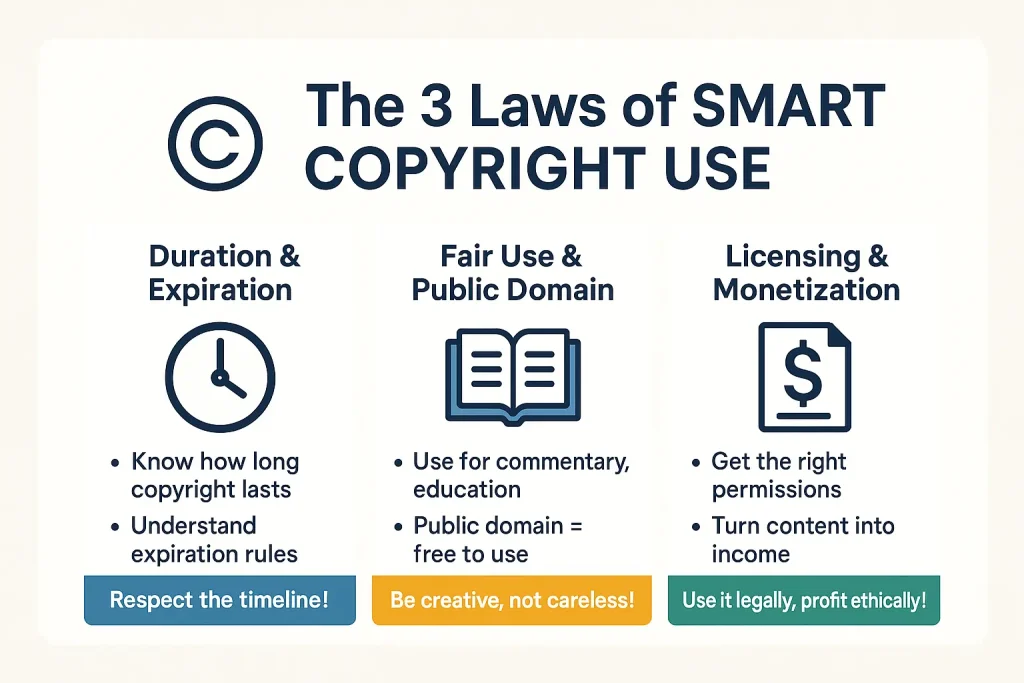
Whether you're producing a documentary, a remix video, or a creative short film, there are safe ways to use copyrighted material:
- ● License scenes legally via rights agencies
- ● Use verified public domain archives
- ● Transform your content to meet fair use standards
- ● Include contracts and term limits when licensing your own work
The more informed you are, the more protected—and profitable—your content can become.
Ready to Take the Next Step? Here’s What to Do Now
Take Action: Protect Your Creative Work
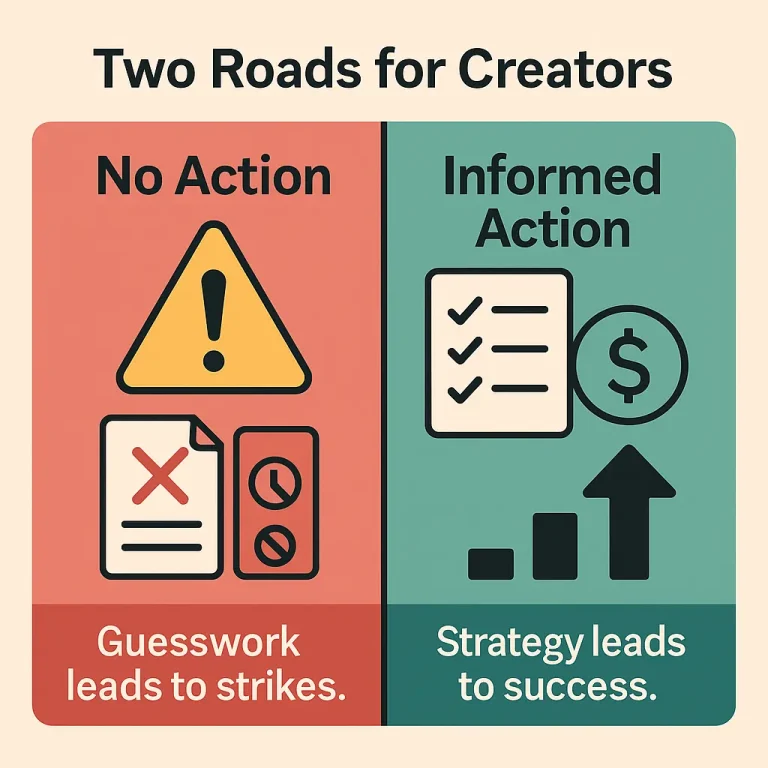
You’ve just unlocked everything you need to know about movie copyright—from checking public domain status to understanding licensing and fair use. But knowledge alone won’t protect your project. Action will.
✅ Want a checklist to verify film rights legally?
Before uploading or distributing your content, download our free Movie Copyright Toolkit. It includes:
- ● A public domain verification flow
- ● A fair use checklist for commentary and criticism
- ● A template for reaching out to rights holders
🎬 Planning to use clips in your project?
Make sure you’re fully protected and strategically compliant by reading our Fair Use Deep Dive. We walk you through:
- ● How to legally use short clips in documentaries, commentary, and mashups
- ● What YouTube and TikTok flag—even if you think it’s fair
- ● Real examples of content that was restored after a takedown