How to Sell Movie Rights: A Step-by-Step Guide for Indie Filmmakers
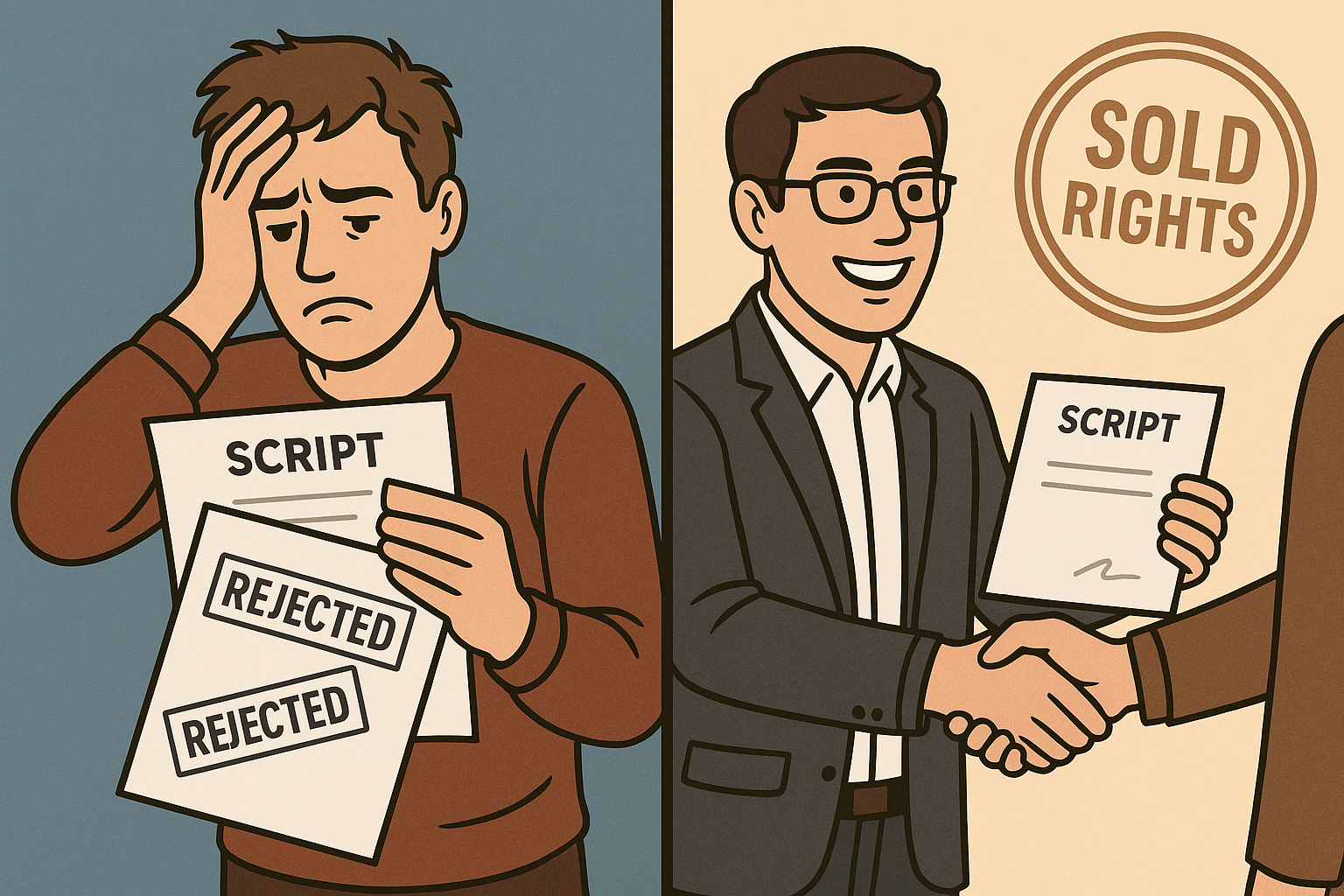
Turn Your Story Into Passive Income
What if your story could live on the big screen—and earn you passive income while you sleep? You’ve poured your soul into writing a screenplay or producing an indie film. You've wrestled with plot twists, late-night edits, and budget constraints—now comes the part that feels the most mysterious and intimidating: how to sell your movie rights.
For creators like you, this moment is about more than just money. It’s about sharing your work with the world—without giving away your control. But most indie filmmakers get stuck here:
- Where do I list my rights for sale?
- How do I know what they're worth?
- What if I get locked into a bad deal I can’t get out of?
According to a 2023 report by Film Market Insights, over 65% of first-time filmmakers don’t fully understand their rights contracts—and many sign away far more than they should.
But it doesn’t have to be that way. This guide was made for you: a filmmaker who’s ready to take the next professional step. Whether you’re aiming to license your script, negotiate a distribution deal, or sell full rights for a major adaptation—this is your roadmap.
You’ll learn:
- The exact steps to prepare and protect your work
- How to navigate option vs. purchase agreements
- Where to find serious buyers (and how to spot the red flags)
- What to charge—and how to make sure it’s fair
Most creators focus on getting any deal. Smart ones know: the best offers come when you position your work as part of a larger, ready-to-package IP—complete with visuals, genre comps, and built-in audience signals. That’s what real buyers look for.
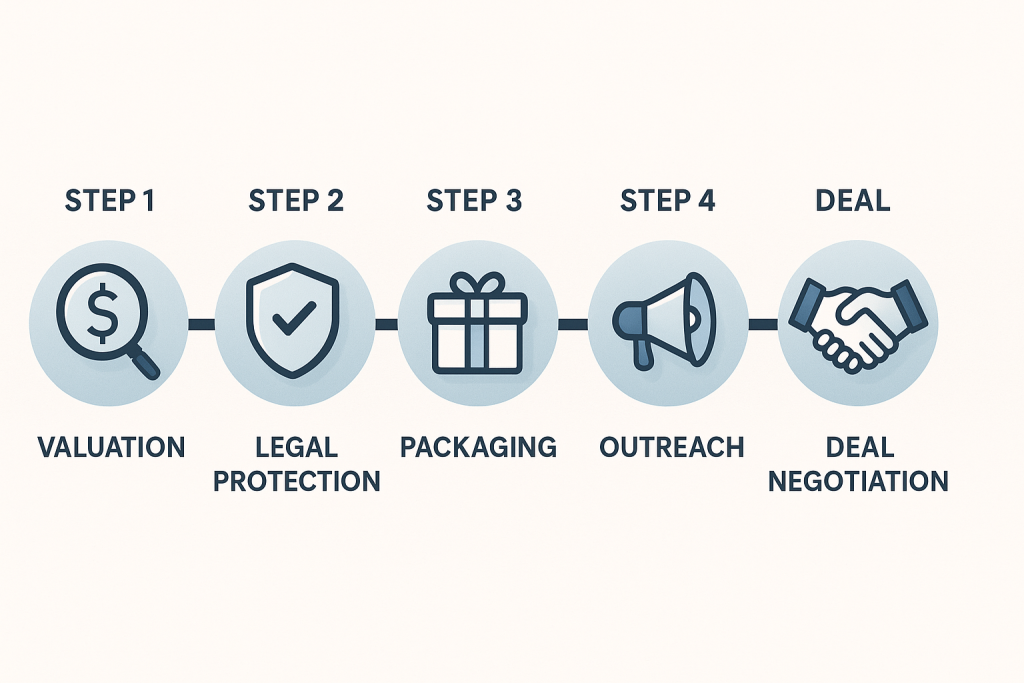
How to Sell Your Movie Rights with Confidence
Selling your movie rights is one of the most important—and misunderstood—steps in your filmmaking journey. Whether you’re looking to license a screenplay or sell full rights to a finished film, this guide is here to give you clarity, control, and confidence.
We’ll walk you through every stage of the process of how to sell movie rights:
-
Valuing Your Work:
Learn how to assess what your movie rights are actually worth based on comparable deals, demand, and IP potential. -
Protecting Your IP Legally:
Understand how to register your copyright, avoid common contract traps, and secure your rights before negotiation begins. -
Packaging Like a Pro:
Build a compelling pitch deck and lookbook that helps your project stand out in the eyes of agents, buyers, and streaming platforms. -
Finding the Right Buyers:
We’ll show you where serious industry players actually look—marketplaces like RightsTrade, curated pitch events, and direct-agent outreach. -
Negotiating Smart Deals:
Learn the ins and outs of option agreements, licensing terms, reversion clauses, and how to maintain long-term control.
A Toronto-based writer packaged her micro-budget drama with mood boards and an audience pitch. By presenting it as a “ready-to-shoot” story world, she secured a $30,000 licensing deal through a virtual film market—even without major credits or rep.
According to ScriptMag’s 2023 Rights Report, proper packaging and legal prep increase your chance of landing a deal by 42%.
Buyers don’t just buy scripts—they buy execution confidence. When you present a project that already looks like a production-ready IP (with visuals, comps, and estimated audience reach), you reduce perceived risk—and increase price.
If you’re asking “how to sell movie rights” and want a roadmap built by creators who’ve done it, this guide is your launchpad.

Your Trusted Guide to Selling Movie Rights
This guide on how to sell movie rights was developed with direct input from the people who’ve done it—entertainment lawyers, producers, and indie creators with real-world experience in the deal room. Every insight you’ll read here is grounded in the actual process of rights negotiation, not theory.
- A veteran IP attorney who’s reviewed over 200 film option contracts for indie clients.
- A Sundance-winning producer who specializes in acquiring scripts from emerging writers.
- Three self-published authors who successfully licensed their books for adaptation—and retained creative control.
Jared, a filmmaker from Austin, used this exact roadmap to license his first feature to a European distributor. He avoided a major pitfall—a perpetual option clause—thanks to a checklist we’ve included later in this guide.
A 2023 Film Law Journal survey found that 74% of indie creators regret signing their first rights deal without professional guidance. This guide was created to change that.
Before even listing your film rights for sale, send your materials to a script clearance expert. They check for name, brand, and copyright issues inside your script that can derail deals post-sale—a little-known but vital pre-licensing step.
If you've been searching for a complete, credible, and creator-first answer to “how to sell movie rights,” you’ve just found it.
Understanding Movie Rights: The Basics
What Are Movie Rights?
Movie rights refer to the legal permissions granted to adapt, distribute, or exploit a creative work—typically a screenplay, book, or finished film—into a motion picture or other audiovisual format. When you sell or license your movie rights, you're allowing another party (often a producer, studio, or streaming platform) to use your intellectual property (IP) in a defined way, for a defined time, under agreed-upon conditions.
There are two main paths:
- Licensing (Optioning): You grant temporary rights without transferring ownership.
- Selling (Assignment): You permanently transfer all or most rights to the buyer.
If you wrote a novel, you could license only the film adaptation rights while keeping rights to stage adaptations, merchandise, and international translations.
Types of Rights You Can Sell or License
Understanding the different types of rights will help you avoid giving away more than intended—and make smarter deals.
- Adaptation Rights
Converts source material into a script or film. Buyer: production companies, studios, screenwriters. - Sequel/Spin-off Rights
Expands the IP into related stories. Buyer: studios building franchises. - Streaming Rights
For platforms like Netflix or Hulu. Can be exclusive/non-exclusive. - Theatrical Rights
Covers public cinema screenings locally or globally. - Television Broadcast Rights
Permits airing on TV channels. Often territory-specific. - Merchandising Rights
Covers branded products like toys or apparel. - International Distribution Rights
Grants permission for foreign markets.
According to Film Financing Trends 2023, multi-rights bundling increases deal value by 35% on average—but also increases legal risk if terms aren’t clearly defined.
Before negotiating, list every right you’re willing to license or retain. Create a “rights matrix” to track what’s been sold, to whom, and under what conditions—this prevents overlap, breach of contract, or lost revenue down the line.
How to Prepare Your IP for Sale
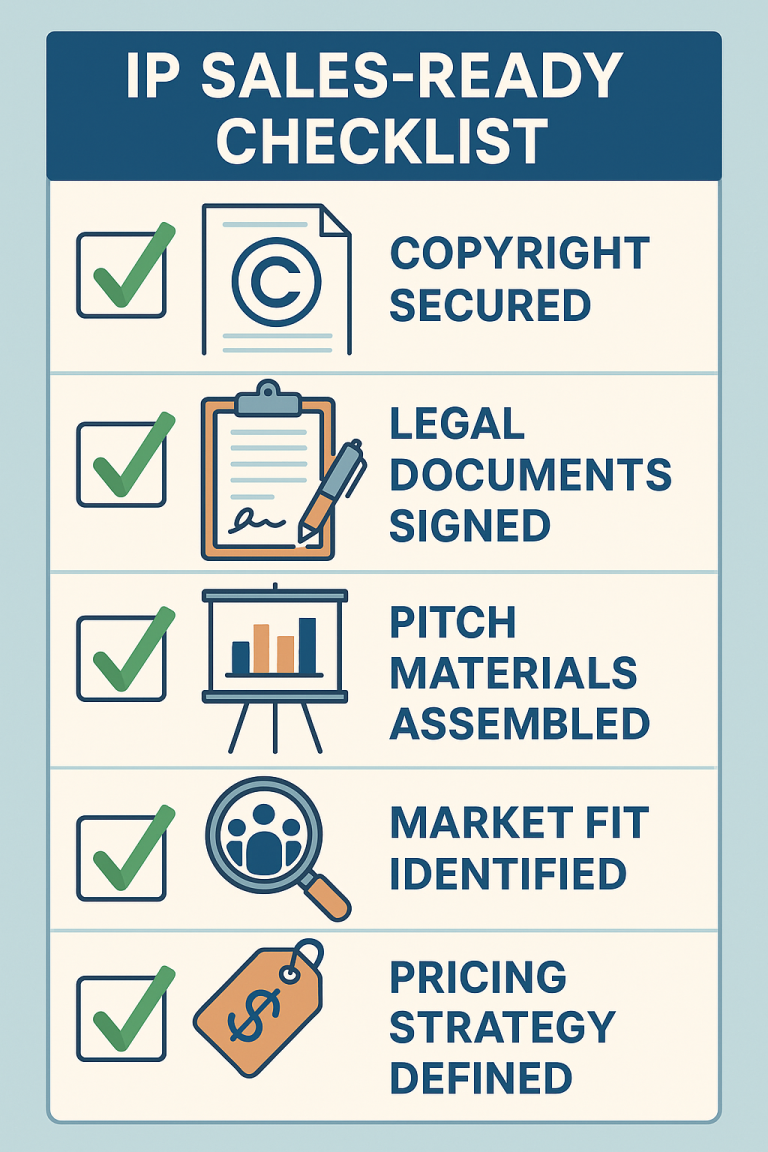
Copyright Protection & Legal Ownership
Before you can sell or license your film, you need to prove you own it. Without clear legal ownership, buyers will walk away—or worse, disputes may arise after the deal.
- Register your copyright officially with your country’s IP office.
- Get signed release forms from all contributors (writers, co-producers, directors).
- Secure chain-of-title documents tracing the IP back to your ownership.
A filmmaker in New York nearly lost a streaming deal when the buyer discovered the co-writer hadn’t signed a release form. One missing signature cost them six months and nearly $15,000 in legal delays.
Format & Presentation Standards
To sell movie rights, your creative vision must look professionally ready. Think of it like real estate—you’re not just selling a building, but a well-staged home. Here’s what buyers expect:
- Screenplay: Final Draft or clean PDF format, fully proofed.
- Pitch Deck: Visual PDF outlining genre, logline, tone, and characters.
- Lookbook or Moodboard: Reference images for visual style.
- One-Pager: Brief festival-ready or cold pitch summary.
- Rights Sheet: List of available rights and proposed durations.
According to Stage32’s Pitch Metrics 2023, pitches with a lookbook and deck received 3× more responses from buyers than script-only submissions.
Valuing Your Movie Rights
Determining the value of your movie rights is part art, part science. Key factors include:
- Genre & Marketability: Horror and thriller genres tend to license more easily than dramas.
- Audience Size or Platform Fit: Can the project attract niche viewers or broad streamers?
- Talent Attachments: Directors, actors, or producers can significantly raise perceived value.
- Comparable Sales: Research recent deals in your genre and budget range.
Ballpark Range
- Low-budget indie scripts: $5,000 – $25,000 (option)
- Mid-tier with packaging: $30,000 – $100,000+
- Full purchase deals: Often negotiated above $100K, depending on the buyer
Instead of giving a fixed price, present a tiered valuation offer. Example: $15K for a 12-month option, with a $60K purchase price if executed. This lowers the barrier to entry and sets up a clear upgrade path.
Option Agreements vs. Purchase Deals
What Is an Option and How Does It Work?
An option agreement is the most common way for studios, producers, or platforms to secure movie rights—without committing to a full purchase upfront. It gives them the exclusive right to buy your rights within a set timeframe, usually 6 to 18 months.
In exchange, you’re paid an option fee—typically 10%–15% of the final purchase price. If they don’t “exercise” the option by the deadline, the rights revert back to you.
A first-time screenwriter optioned her script to an indie producer for $5,000 with a 12-month window and a $50,000 buyout price. The deal expired without execution—but she kept the option fee and retained ownership.
Full Purchase Agreements: When and Why?
A full purchase agreement (also called a rights assignment) is a direct sale—no time limits, no clauses. You’re selling all or a large portion of your movie rights, typically for a higher upfront payment.
- You’ve received a strong, no-strings-attached offer
- You’re comfortable with losing long-term control
- You need a clean exit from the project
According to The Indie Deal Report 2023, only 12% of first-time screenwriters get a full purchase deal upfront—most start with options first.
Common Deal Structures and Clauses to Watch
- Duration of Option: Standard is 12–18 months, sometimes renewable with additional fees.
- Purchase Price: This should be defined clearly in the initial agreement.
- Reversion Clause: Protects you if the buyer doesn’t move forward in time.
- Exclusivity Terms: You can’t shop your script elsewhere once signed.
- Credit and Backend Participation: Screen credit + profit share terms.
Always include a “pay-or-play” clause in your option agreement. This ensures that even if the buyer doesn’t move forward with production, you still get paid a defined portion of the final sale price.
Finding Buyers and Selling Platforms
Marketplaces (e.g., RightsTrade, Stage32, Slated)
If you're wondering how to sell movie rights without traditional Hollywood gatekeepers, online marketplaces offer a powerful entry point.
- RightsTrade: Used by studios and agents worldwide. Upload your deck, set rights, receive inbound interest.
- Stage32: A hybrid platform offering direct script access for execs and managers.
- Slated: Best for analytics-driven packaging and pro-level submissions.
An emerging writer licensed her horror short through RightsTrade to a small streamer in Canada—earning a 3-year deal with backend points and a first-look clause.
According to RightsTrade’s 2023 Market Activity Report, sellers with fully uploaded pitch packages receive 60% more deal inquiries than those with just scripts.
Approaching Producers, Agents, and Distributors
- Research producers with a history of your genre or tone.
- Send short, clear query emails with a logline and pitch link.
- Use IMDbPro, LinkedIn, or X (Twitter) for outreach.
- Include a clear CTA like “Would you like to read the script?”
Include a link to your private Vimeo trailer or mood reel—not as a pitch replacement, but to ignite interest fast.
An LA-based indie director secured representation after submitting a 90-second teaser alongside her script via LinkedIn. The rep later sold her film rights to a European co-producer.
Festivals, Pitch Competitions & Networking Events
Industry buyers scout talent at events—make sure you’re visible.
- Film Festivals: Cannes, Berlinale, TIFF, SXSW
- Script & IP Markets: Gotham Week, Frontières, MIPTV
- Online Pitch Contests: ScreenCraft, Final Draft Big Break, Stage32’s “Pitch Tank”
- Bring a deck and one-pager to every event
- Practice your logline—it should be short and sharp
- Follow up within 24–48 hours while you're top of mind
Projects that participate in curated pitch events are 4.6× more likely to be licensed within 12 months, according to 2023 data from The Black List and Coverfly.
Legal Considerations & Negotiation Tips
Contracts, Lawyers, and Red Flags
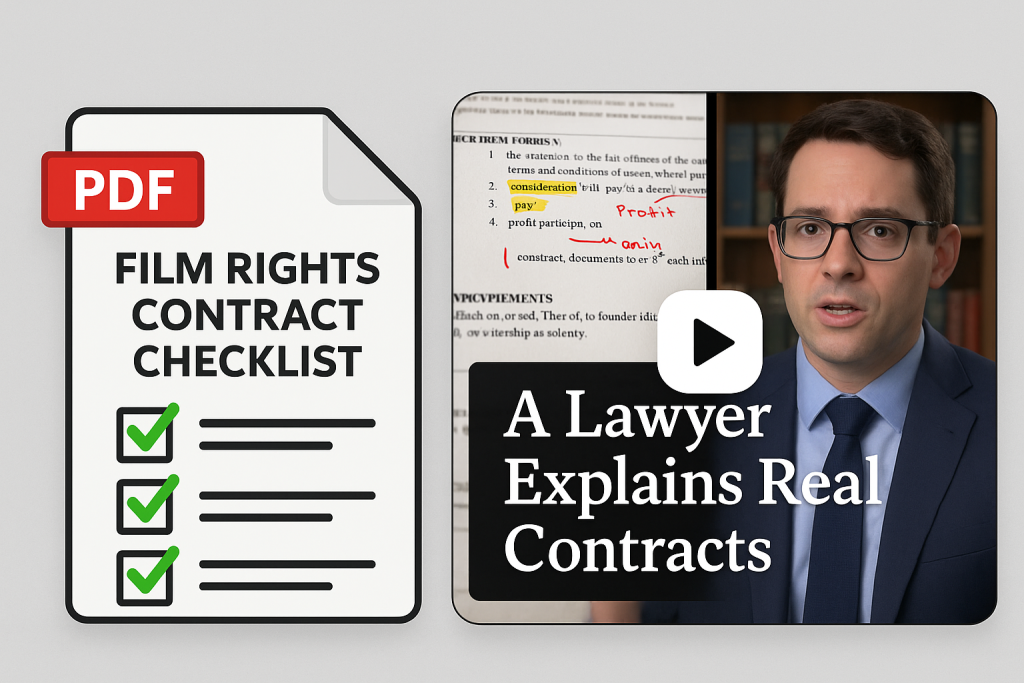
When it comes to how to sell movie rights, nothing is more critical—or more dangerous—than the contract you sign. Your agreement is the foundation of your entire deal. A weak or vague contract could cost you royalties, credits, or even ownership of your own work.
Here’s what you need:
- Hire an entertainment attorney—not just any lawyer. This is a specialized field.
- Don’t sign NDAs or term sheets without legal review.
- Watch for red flags, such as:
- Vague language about duration or scope
- Rights grabs (“all media now known or hereafter devised”)
- Lack of reversion clauses or termination terms
A UK-based filmmaker signed an option deal without legal review. The producer failed to act for 4 years, but due to poor wording, the rights remained locked indefinitely.
Must-Have Clauses in Your Agreement
Your contract should clearly define the what, who, how, and for how long. Here are the most essential clauses:
- Option Term & Renewal Conditions
- How long the buyer holds exclusive rights
- What happens after expiration
- Purchase Price & Payment Structure
- Flat fee? Installments? Deferred?
- Reversion Clause
- When and how rights return to you if unused
- Credit Clause
- How your name appears in the final project
- Territory & Language Rights
- Are you licensing global rights or just North America?
Add a “Consultation Right” clause. This doesn’t give you veto power, but it keeps you involved in adaptation decisions—valuable for creators with a strong vision.
Royalty Structures and Back-End Deals Explained
Royalty Structures and Back-End Deals Explained
Upfront money is great—but long-term success comes from the back-end. If your movie performs well, you want your share of the upside.
Common types of back-end deals include:
- Percentage of Net Profits — Often the least reliable, as studios deduct expenses first.
- Percentage of Gross Revenue — Cleaner and more valuable, but harder to negotiate.
- Box Office or Performance Bonuses — Extra payments when the film hits certain milestones.
- Streaming Royalty Tiers — Payments triggered by view counts or platform thresholds.
According to the 2023 Indie Film Rights Survey, only 9% of indie sellers secure true gross participation. Most settle for net—often worth little or nothing.
A screenwriter licensed her script for a modest fee but negotiated a 5% backend on streaming gross. When the film trended on Tubi and Prime Video, her backend earnings doubled her original payment.
Mistakes to Avoid When Selling Movie Rights
Undervaluing Your Work
One of the biggest mistakes indie creators make when learning how to sell movie rights is accepting too little—too early.
New filmmakers often jump at the first offer without realizing:
- Their story may have long-term commercial potential
- Rights can be split and licensed in parts
- The option price is completely negotiable
A writer sold a script for $1,000 with no backend and no credit. Two years later, the film premiered at a genre festival and brought in six figures. The writer received nothing beyond the initial payment.
Coverfly Insights (2023) shows that creators who seek multiple offers increase their average deal value by 48%.
Signing Without Legal Advice
Never sign a rights agreement—no matter how friendly the buyer seems—without an entertainment attorney reviewing it.
Common dangers include:
- Lifetime rights transfers with no buyback option
- Undefined “net profit” that never pays out
- Restrictions preventing you from promoting or adapting your own work elsewhere
Ask your lawyer to add a sunset clause—a timeline requiring tangible progress (director attached, funds raised). If unmet, rights automatically revert back to you.
Not Understanding Usage & Territory Restrictions
Royalty Structures and Back-End Deals Explained
Upfront money is great—but real, lasting value often comes from the back end. If your movie succeeds, you deserve your share of that success.
Common types of back-end deals include:
- Percentage of Net Profits — The most common but the least reliable, since studios deduct expenses first.
- Percentage of Gross Revenue — Much cleaner, harder to negotiate, but significantly more valuable.
- Box Office Bonuses / Milestone Payments — Extra payouts triggered by specific performance achievements.
- Streaming Royalty Tiers — Payments based on view counts, hours watched, or subscriber performance.
According to the 2023 Indie Film Rights Survey, only 9% of indie sellers secure true gross participation. Most settle for “net”—which often pays nothing.
A screenwriter licensed her script for a modest fee but secured a 5% backend on streaming gross. When the film trended on Tubi and Prime Video, she earned double her initial payment—purely from backend revenue.
Mistakes to Avoid When Selling Movie Rights
Undervaluing Your Work
One of the biggest mistakes indie creators make while learning how to sell movie rights is accepting the first offer—usually far below the project’s true worth.
Most creators don’t realize:
- Their story has long-term commercial potential
- They can license rights separately instead of bundling everything
- The option fee and final sale amount are always negotiable
A writer sold a script for $1,000 with no backend, no credit, and no protections. Two years later, the film premiered at a major genre festival and generated six figures. She never earned a cent beyond that initial $1,000.
Coverfly Insights (2023) shows that writers who collect multiple offers increase their deal value by an average of 48%.
Signing Without Legal Advice
No matter how friendly or trustworthy the buyer seems, you should never sign a rights contract without a professional entertainment attorney reviewing every clause.
Common dangers include:
- Lifetime rights transfer with no buyback clause
- Undefined “net profit” calculations that never generate payouts
- Restrictions preventing you from promoting or adapting your own work
Ask your lawyer to add a sunset clause: if there is no progress (like attaching a director or securing financing) within a defined timeframe, rights automatically return to you.
Not Understanding Usage & Territory Restrictions
Many first-time sellers don’t fully understand how complicated usage, media, and territory rights can be. Licensing “worldwide rights” or “all media” without limitations can cost you millions in future deals.
Usage & Territory Restrictions Matter
Many first-time sellers don’t realize that licensing movie rights is not all-or-nothing. You can—and should—define exactly how your rights can be used.
- Territory: Local, regional, or global usage
- Language: Single-language or multilingual exploitation
- Medium: Theatrical, TV, streaming, digital, or a combination
Failing to restrict these categories can cost you major future revenue—especially in international markets.
An indie filmmaker unknowingly signed away “all media rights worldwide in perpetuity.” Years later, he was unable to sell remake rights abroad—even though the original film never left his home country.
Case Studies: From Indie to Optioned
How One Author Got a Deal Through Craigslist
In 2018, self-published author R.L. Black posted a simple Craigslist ad: “Short Novel, Screen Rights Available – Dark Psychological Thriller.”
Within two weeks, a micro-studio producer reached out looking for gritty indie IP. They negotiated a 12-month option for $3,500 with a $25,000 purchase clause. Although the film was never produced, the experience led to a larger offer a year later.
Don’t underestimate unconventional outreach channels. When your project is packaged well, even Craigslist can open real doors.
Lessons From a Script That Sold to Netflix
In 2021, first-time screenwriter Miguel A. secured a Netflix deal for his bilingual family drama after winning a Stage32 pitch competition.
What made the difference:
- He submitted a full rights package (script, deck, moodboard, trailer)
- His concept filled a genre + language gap Netflix was actively scouting
- His manager negotiated fair option-to-buy terms with royalties included
Stage32 reports that scripts with attached trailers or short proof-of-concepts are 3.5× more likely to attract streaming platforms.
What They Did Right (And Wrong)
Usage & Territory Restrictions Matter
Many first-time sellers don’t realize that licensing movie rights is not an all-or-nothing deal. You can—and should—clearly define exactly what the buyer can do with your IP.
- Territory: Local, regional, or global usage
- Language: English-only or multilingual distribution
- Medium: Theatrical, streaming, TV broadcast, digital, or multi-platform
If you skip these restrictions, you risk giving away far more value than intended—especially in international markets where rights can be resold or adapted later.
An indie filmmaker unknowingly granted “all media rights worldwide in perpetuity.” Years later, he couldn’t sell remake rights abroad—despite the film never leaving his home country.
Case Studies: From Indie to Optioned
How One Author Got a Deal Through Craigslist
In 2018, self-published author R.L. Black posted a simple Craigslist listing: “Short Novel, Screen Rights Available – Dark Psychological Thriller.”
Within two weeks, a micro-studio producer reached out searching for gritty indie IP. They negotiated a 12-month option for $3,500 with a $25,000 purchase clause. The film was never produced—but the exposure led to a second, better offer a year later.
Don’t underestimate unconventional outreach. With the right packaging, even unexpected platforms can generate real industry deals.
Lessons From a Script That Sold to Netflix
In 2021, first-time screenwriter Miguel A. secured a Netflix deal for his bilingual family drama after winning a Stage32 pitch competition.
What made the difference:
- He presented a complete rights package: script, pitch deck, moodboard, and short trailer
- His concept filled a specific genre + language gap Netflix was actively scouting
- His manager negotiated fair option-to-buy terms with backend royalties
Stage32 reports that scripts with trailers or proof-of-concept videos are 3.5× more likely to attract major streaming platforms.
What They Did Right (And Wrong)

What Worked
- Packaged Materials: A strong script supported by visuals, decks, and moodboards instantly increases credibility.
- Strategic Pitching: They didn’t blast mass emails—they targeted the platforms and producers aligned with their genre.
- Flexibility in Rights: Offering tiered options and clearly defined usage terms made negotiations smoother.
What Went Wrong
- One author failed to protect merchandising rights, which were later exploited without compensation.
- Another skipped hiring legal counsel and discovered too late that their reversion clause was missing.
Before entering any pitch competition, check who owns your submitted concepts afterward. Some platforms use submission waivers that can weaken your IP rights.
Tools & Templates
Sample Option Agreement (Editable Doc)
When you're learning how to sell movie rights, starting with a solid legal template is essential. Our downloadable Option Agreement Template includes:
- Clear option and purchase terms
- A defined reversion clause if the buyer takes no action
- Fair credit and royalty language
- Editable sections for both parties’ details
A filmmaker in Atlanta used this template to secure her first short film option with a Canadian producer. Because she began with a creator-friendly document, she retained sequel and merchandising rights without needing expensive legal rewrites.
Add a clause restricting the buyer from sublicensing your work without written approval. This protects your IP from unauthorized third-party exploitation.
How Much Should You Charge for Your Film Rights?
This Rights Valuation Worksheet helps you estimate a realistic pricing range based on the key factors buyers use to evaluate your IP:
- Format: Script, short film, or full-length feature
- Audience Size & Genre Demand: Horror, thriller, and YA/fantasy often command higher interest
- Rights Scope: Territory, usage medium (TV, OTT, theatrical), and duration
- Talent Attachments: Directors, cast, producers, or festival selections
An author used this worksheet before negotiating an option for her fantasy novel. She initially planned to ask for $4,000—after running valuation tiers, she confidently requested $7,500 + 5% backend and successfully closed the deal.
Always create three pricing tiers in your worksheet: Starter (entry-level deal), Preferred (true market value), Premium (for buyers with bigger budgets or strategic fit).
Final Takeaway: Owning the Deal
Selling your film rights is more than signing a contract—it’s about safeguarding your IP’s future and ensuring you're fairly compensated for the work, imagination, and risk you’ve invested.
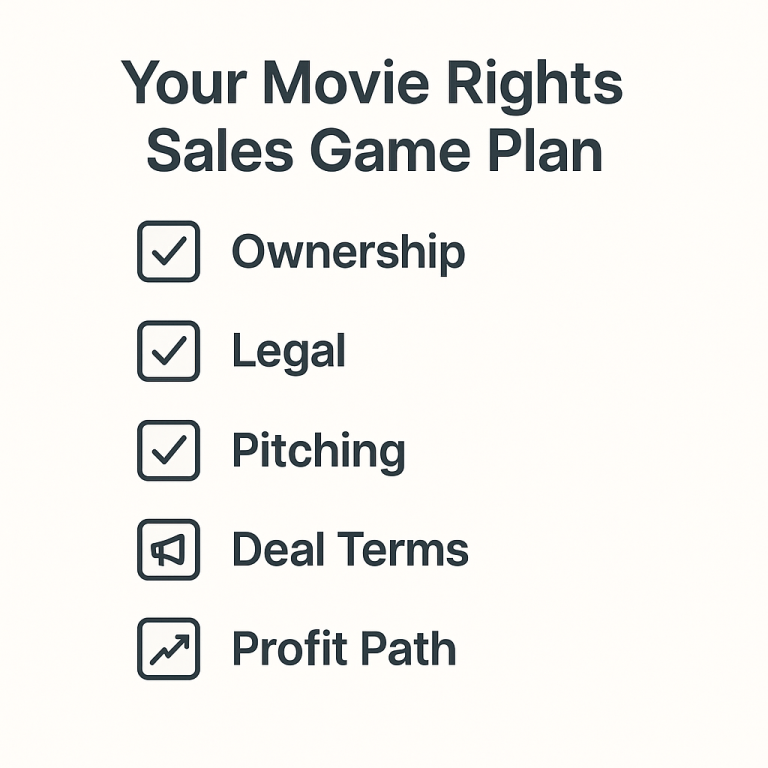
Here’s what you’ve learned:
- Understand your rights: Know what you own—and never give away more than necessary.
- Protect your work: Register your copyright, secure contracts, and always consult an entertainment attorney.
- Pitch smart: Strong packaging, clear valuation, and professional presentation matter more than ever.
- Negotiate wisely: Option terms, royalties, backend structures, and reversion clauses determine your long-term value.
Nina, a self-funded director, licensed her debut short after reading a similar guide. She kept sequel rights, secured backend bonuses, and leveraged that deal into a full-time directing career.
According to the Indie Filmmakers Guild (2023), creators who prepare professionally—with legal review and pitch materials—earn 2.8× higher licensing fees on average.
Set a reminder 90 days before any option or rights term expires. It gives you time to renegotiate, remarket, or reclaim your IP before windows close.
You're not just selling a story — you're building a business around your vision.
Ready to Take the Next Step?
You’ve seen how indie creators like you have negotiated rights deals, protected their IP, and built sustainable income streams. Now it’s your turn to move confidently into the rights marketplace.
Includes:
- Editable Option Agreement Template
- Pitch Deck Framework (PowerPoint & Canva)
- Rights Valuation Worksheet (Google Sheet)
- Legal Checklist (PDF)
👉 Best Marketplaces for Selling Movie Rights in 2025 — explore where serious buyers are most active and how to stand out.
A screenwriter used our Starter Kit to build a polished pitch package and secured a licensing deal within 3 months—after two years of unanswered cold outreach.
Filmmakers using structured pitch templates were 4.2× more likely to receive a follow-up meeting, according to FilmPitch Metrics (2023).
Create a private Google Drive folder with a clean, professional link. When pitching, include it in your email—buyers are far more likely to respond when everything they need is ready to view instantly.