How to Buy Film Rights: The Complete 2025 Guide
How to Buy Film Rights: The Complete 2025 Guide
You’ve just found a book, a short film, or a forgotten indie gem that feels perfect for your next project. You’re already imagining the cast, the trailer, the festival buzz. But there’s a catch: you don’t own the story.
Buying film rights is the legal bridge between inspiration and execution. Whether you're an indie filmmaker in Mumbai or a YouTube creator in Los Angeles, knowing how to acquire rights—legally and profitably—can make or break your production.
In 2021, an independent producer in Delhi adapted a short story from an obscure blog without purchasing rights. The author discovered it, filed a claim, and the film was removed from YouTube. The entire project—including ₹3.5 lakh in production costs—was lost overnight.
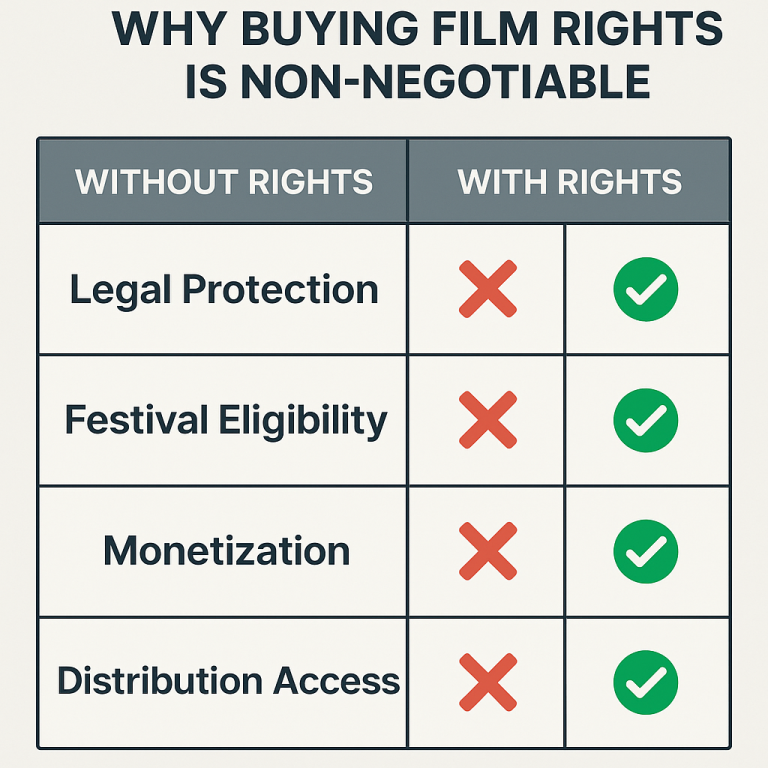
Why You Must Secure Film Rights Before You Shoot
Unauthorized use of a script, story, or footage can lead to lawsuits, takedowns, and permanent bans on platforms like Netflix, Amazon, or major festivals. Rights are not optional—they’re the legal backbone of your film.
What This Guide Will Show You
If you’ve ever Googled “how to buy film rights,” you’ve likely asked:
- Where do I buy film rights?
- How much do film rights cost in 2025?
- What’s the legal process?
- How do I avoid scams or loopholes?
This guide simplifies everything—step-by-step methods, platform recommendations, contracts, and pricing benchmarks—so you gain clarity and confidence.
Who This Guide Is For
This guide is designed for anyone needing to legally acquire creative rights:
- Filmmakers adapting novels, blogs, or short stories
- Content creators licensing films or clips for YouTube
- Studio executives exploring international rights
- Legal advisors handling IP acquisitions
When negotiating rights, don’t stop at “film rights.” Consider:
- OTT/streaming rights (Netflix, Hotstar, Amazon Prime)
- International distribution
- Merchandising
- Sequel, prequel, and spinoff rights
🎯 Over 60% of indie films today are based on existing IP—books, blogs, true stories—because IP increases marketability and investor confidence.
Ready to Get Started?
By the end of this complete 2025 guide, you’ll know exactly how to buy film rights—without overpaying, breaking laws, or getting trapped in confusing contracts.

Can You Legally Film It? And At What Cost?
You’ve found the perfect story. But can you legally film it? And at what cost?
These questions keep creators awake at night. You’re ready to shoot—your vision is sharp, your crew is set, maybe your funding is secured. But without the legal rights, your film becomes a legal liability and a potential financial disaster.
Whether you're an indie filmmaker in Mumbai, a YouTuber in Toronto, or producing for OTT in London, figuring out how to buy film rights can feel overwhelming. Most advice online is generic, overly technical, or written for big studios—not for independent creators.
A YouTube creator in Chennai adapted a comic strip for a sketch without purchasing the rights. The video hit 500K views—but also received a copyright strike. Monetization dropped, and the creator later paid a ₹2 lakh settlement to avoid legal escalation.
In This Guide, You’ll Discover:
- Where and how to buy film rights (even without a studio)
- How much film rights cost—and what influences pricing
- What legal agreements you need, plus sample clauses
- Which platforms are safest for purchasing IP
- Country-specific pitfalls (India, U.S., EU)
Always get platform, territory, and format splits in writing. Many creators secure “film rights” but later discover they cannot stream or distribute internationally. Rights can be sliced much more narrowly than most people realize.
Unlike generic marketplace guides, this resource is practical, creator-driven, and lawyer-reviewed. We’ve merged global legal insight with real-world creator experience to build the most complete and relevant guide for buying film rights in 2025.
What Are Film Rights and Why Do You Need Them?
Definition of Film, TV, and Adaptation Rights
Film rights are legal permissions that allow you to adapt, distribute, or exhibit someone else’s creative work in a visual format—whether as a feature film, OTT web series, documentary, or short film. These rights commonly apply to:
- Books
- Plays
- Articles
- True stories
- Existing films and documentaries
Depending on what you’re creating, you may specifically need:
- Film rights (for theatrical or video-on-demand release)
- TV rights (episodic, broadcast, or satellite distribution)
- Adaptation rights (permission to turn a story into a screenplay)
If your project is based on someone else’s work—even partially—you must secure the appropriate film rights before shooting, streaming, or distributing.
A Mumbai-based production house purchased rights to a self-published Kindle novella for ₹30,000. Three years later, the adaptation became a viral OTT mini-series and was licensed internationally. Without securing rights upfront, the creators risked lawsuits and losing all revenue.
Exclusive vs. Non-Exclusive Rights Explained
When you buy film rights, they fall into one of two categories:
- Exclusive rights: Only you can adapt or distribute the material in the agreed territory and format.
- Non-exclusive rights: Multiple creators may license and adapt the same work.
Exclusive rights are more expensive but grant full creative and commercial control. Non-exclusive rights cost less—but you may face competition.
Common Types of Rights (And Why They Matter)
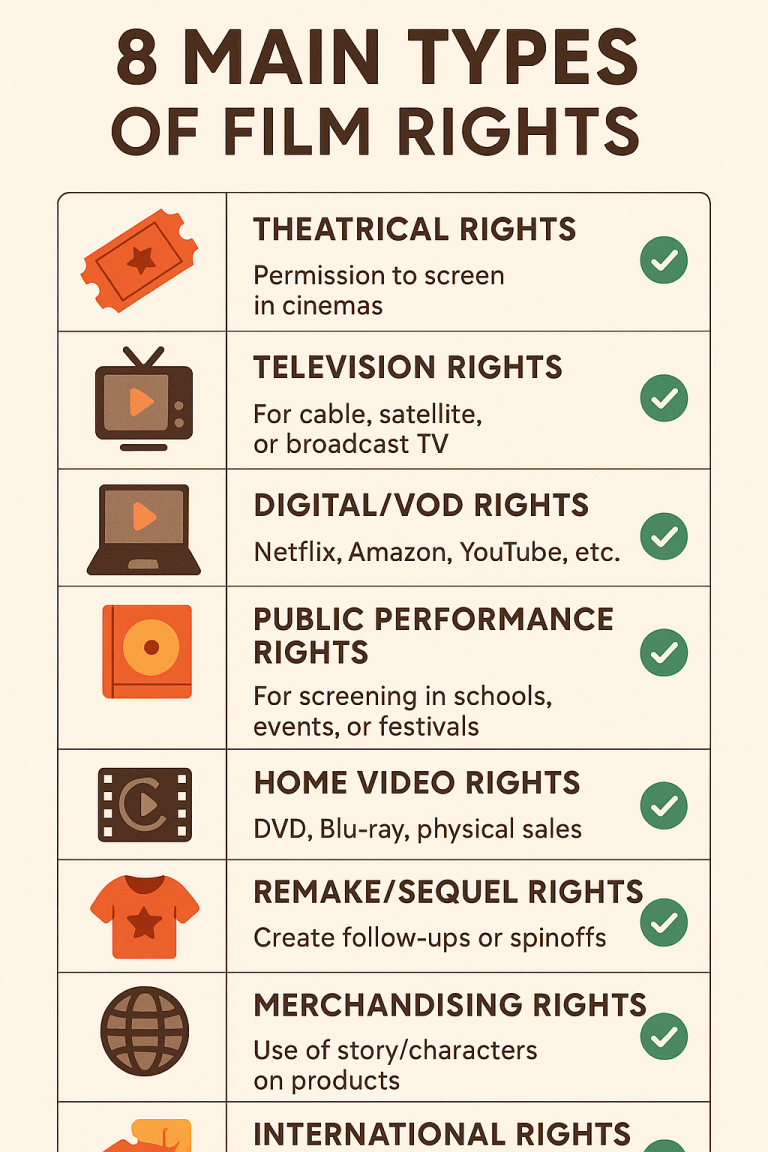
Purchasing film rights isn’t a simple yes/no decision. Rights are divided across formats, distribution methods, and territories. Here are the most common types:
- 1. Theatrical Rights – Permission for cinema distribution
- 2. Television Rights – Cable, satellite, broadcast
- 3. Digital / VOD Rights – Netflix, Amazon, YouTube, OTT
- 4. Public Performance Rights – Schools, events, or festivals
- 5. Home Video Rights – DVD, Blu-ray, physical formats
- 6. Remake / Sequel Rights – Follow-ups, prequels, adaptations
- 7. Merchandising Rights – Characters or story elements on products
- 8. International Rights – Distribution in foreign territories
Each right can be sold or licensed separately—which is why defining exactly what you’re buying is crucial.
A 2023 WIPO study found that 45% of indie film disputes stem from unclear or missing rights definitions. Clear contracts now prevent expensive crises later.
The 5-Step Process to Buying Movie Rights
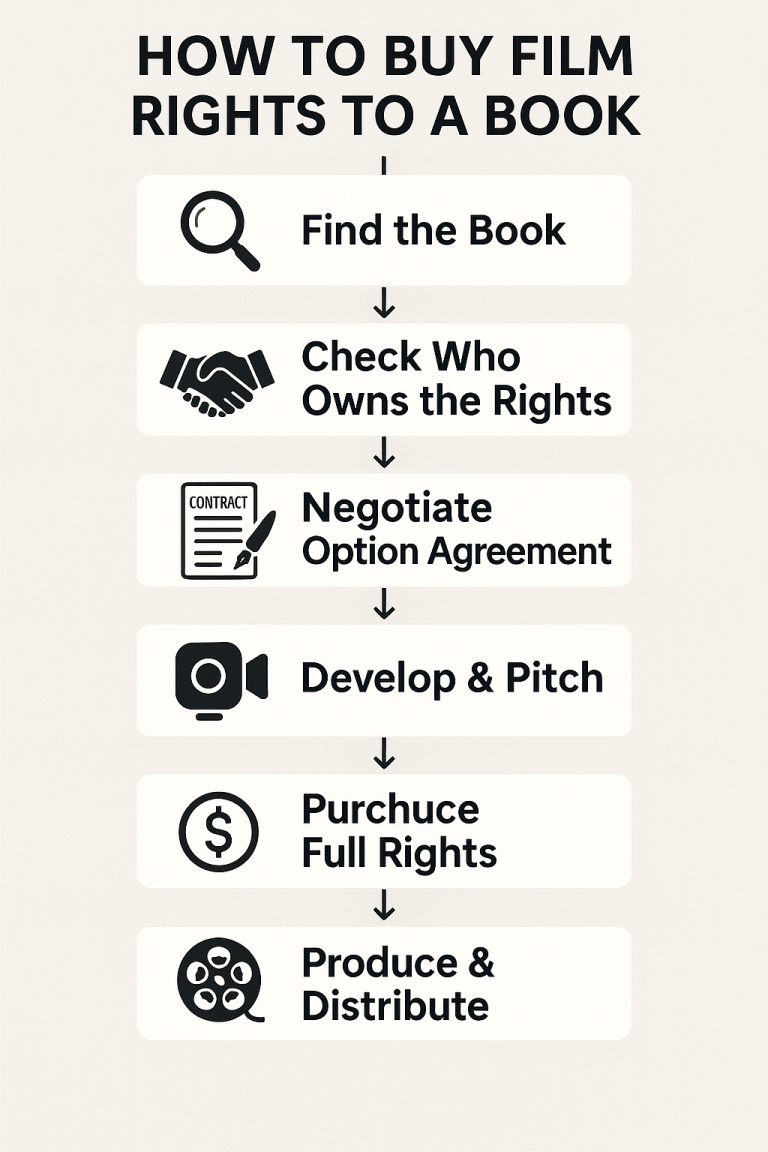
Buying movie rights may seem overwhelming at first, but when broken into clear steps, it becomes a strategic process that gives you both creative power and legal protection. Whether you're a filmmaker, producer, or digital creator, this guide shows you how to buy film rights safely, legally, and profitably.
Step 1 — Identify the IP Owner (Author, Publisher, Producer, Agent)
Before any negotiation begins, you must verify who legally owns the intellectual property. This could be:
- The author (in self-published works)
- A publishing house
- A production company
- A rights management agency
- Or multiple parties holding different rights
Step 2 — Verify Availability & Existing Agreements
A story may exist—but that doesn’t mean its rights are available. Confirm whether:
- The rights are currently unassigned
- Another buyer has an active option
- Existing deals restrict formats or territories
Red flags include:
- Expired but still enforceable option agreements
- Unregistered collaborations (co-authors, co-creators)
- Rights split between film, TV, and digital formats
Step 3 — Negotiate Terms (Price, Territory, Duration)
Once rights availability is confirmed, begin negotiations. Key terms include:
- Price — fixed fee, royalties, or hybrid
- Territory — regional, national, global
- Duration — 1 year, 5 years, 10 years, perpetual
- Format — theatrical, OTT, YouTube, TV, festivals
- Exclusivity — sole rights or non-exclusive use
Step 4 — Sign a Legally Binding Contract
Never rely on verbal agreements. Platforms, festivals, and distributors may demand written proof of rights ownership.
Your contract **must** include:
- Names of all parties and exact IP licensed
- Format, territory, and duration of rights
- Payment schedule and deliverables
- Termination and reversion clauses
- Warranties, indemnities, and liability terms
Step 5 — Register & Protect Your Rights
After signing, protect your agreement by registering it with the appropriate authority or using digital timestamp services.
- Store all communication and invoices
- Keep signed soft and hard copies
- Be prepared to show rights proof to OTT or YouTube
Where to Buy Film Rights Online (Top Platforms in 2025)
Online marketplaces now make rights acquisition faster and more transparent. Here are the top platforms to explore:
RightsTrade
Overview: A global marketplace often described as the “LinkedIn of film rights.”
Why It Stands Out:
- Used by 12,000+ companies and 28,000+ professionals
- Tools like Deal Wizard, analytics, and screeners
- Search by territory, format, language, and rights availability
Vitrina.ai
Overview: An AI-driven platform offering deep market intelligence for film and TV rights.
Why It Stands Out:
- Advanced cross-border analytics
- AI-powered buyer/seller credibility scoring
- Rights availability searchable by country
Best For: Studios and OTT operators scaling into new regions.
MediaBank.tv
Overview: MediaBank.tv is a fast, broadcast-ready licensing platform tailored for television networks, festivals, and event programmers seeking instant access to cleared content.
Why It Stands Out:
- Zero-commission model for buyers
- Clean, intuitive interface optimized for professionals
- Instant screener downloads after licensing
Best For: TV networks, film festival curators, educational institutions, and cultural organizations.
Literary Agencies & Book Rights Markets
Overview: If you plan to adapt a book, article, memoir, or piece of long-form writing, the most reliable path is through:
- Literary agents representing authors
- Publishing houses with media rights divisions
- Rights fairs such as Frankfurt Book Fair or London Book Market
How Much Do Film Rights Cost? (Transparent Pricing Guide)
There is no universal rate card for film rights. Costs vary widely based on popularity, format, territories, and exclusivity. However, knowing these variables helps you estimate fair pricing and negotiate confidently.
Factors That Influence Price
Rights pricing is shaped by a mix of creative, commercial, and legal factors:
- IP Popularity & Proven Market Value
- Bestsellers or viral content → higher pricing
- Niche or unpublished works → typically lower cost
- Territory Scope
- Global rights cost significantly more
- U.S. & EU territories usually command premiums
- Exclusivity
- Exclusive rights can be 3–5× more expensive than non-exclusive licenses
- Media Format
- Film ≠ TV ≠ Digital ≠ Stage rights
- Bundled format rights raise the price
- Duration
- Short-term (12–18 months) = lower cost
- Long-term/perpetual = premium pricing
Sample Pricing for Common Rights Types
| Rights Type | Low Budget | Mid-Market | High-End IP |
|---|---|---|---|
| Book-to-Film (unpublished) | $500 – $2,000 | $3,000 – $8,000 | $20,000+ |
| Short Film Adaptation | $250 – $1,000 | $1,500 – $5,000 | $10,000+ |
| Article / Blog Licensing | $100 – $500 | $500 – $2,000 | $5,000+ |
| Festival Documentary Rights | $1,000 – $5,000 | $6,000 – $15,000 | $25,000+ |
| Streaming / VOD License (1 year) | $300 – $2,000 / region | $3,000 – $10,000 | $15,000 – $50,000+ |
Hidden Fees & Legal Costs to Expect
- Legal fees for drafting/review ($300–$1,000)
- Royalties or backend revenue share
- Platform verification fees for OTT/YouTube
- Translation, adaptation, or clearance costs
Country-Specific Legal Guidelines (India, U.S., EU)
Rights laws differ significantly by region. Knowing these differences helps you avoid legal risks, delays, and invalid agreements.
Buying Movie Rights in India
India’s film ecosystem is vast and legally complex. While all rights fall under the Copyright Act of 1957, enforcement varies widely.
Process:
- Identify the rights holder (author, publisher, or studio)
- Sign a detailed licensing agreement
- Stamp and register the contract
- Pay GST (usually 18%) on IP services
Common Pitfalls:
- Verbal deals are unenforceable
- Music + lyric rights require separate clearance
- Rights often split by language (Hindi, Tamil, Bengali, etc.)
Differences in the U.S. & EU
United States:
- Works after 1978 = 70 years after author’s death
- Public domain includes works published before 1929 (as of 2025)
- Fair use is a defense — not a license
European Union:
- 70-year copyright rule also applies
- Moral rights are stronger and long-lasting
- Streaming contracts often include equitable remuneration
How to Buy Film Rights: The Complete 2025 Guide
You’ve just found a book, a short film, or a forgotten indie gem that feels perfect for your next project. You’re already picturing the lead actor, the trailer, the festival circuit. But there’s a catch:you don’t own the story.
Buying film rights is the legal bridge between inspiration and execution. Whether you're an indie filmmaker in Mumbai or a YouTube creator in Los Angeles, understanding how to acquire those rights—legally and profitably—can make or break your production.
Why You Must Secure Film Rights Before You Shoot
Let’s be clear: using a script, story, or footage you don’t own can land you in legal and financial chaos. Unauthorized adaptations often lead to lawsuits, takedowns, and permanent bans from festivals and platforms like Netflix or Amazon.
In 2021, an independent producer in Delhi adapted a short story from an obscure blog without buying rights. The original author found out—by the time the film was on YouTube, a legal takedown and copyright claim had already been filed. The entire project, including ₹3.5 lakh in production costs, was lost overnight.
What This Guide Will Show You
You’re not alone in this. Thousands of creators each year face the same questions of How to buy film rights:
- Where do I buy film rights?
- How much do they cost to buy film rights ?
- What’s the legal process?
- How do I avoid scams or loopholes?
This 2025 guide is here to simplify everything. With step-by-step strategies, platform reviews, contract insights, and pricing benchmarks, you’ll walk away with both clarity and confidence.
Who This Guide to buy film rights Is For
If you’re any of the following, this guide is written for you to know how to buy film rights:
- A filmmaker ready to adapt a novel or short story
- A content creator looking to license clips or films for YouTube
- A studio executive seeking international distribution rights
- A legal advisor helping clients acquire media rights
When negotiating rights, don’t just ask for “film” rights. Consider:
- Streaming rights (OTT platforms like Netflix, Hotstar)
- International distribution
- Merchandising
- Sequel/prequel/spinoff options
🎯 According to Variety, over 60% of indie films now include IP-based storytelling—meaning they’re adapted from existing books, blogs, or true stories. IP = investment protection.
Ready to Get Started?
By the end of this guide, you’ll know exactly how to buy film rights without overpaying, breaking laws, or getting lost in legal lingo.
Rights Duration, Reversion, and Renewal Laws
No matter where you buy film rights, your deal should include:
- License duration (e.g., 3 years, 10 years, perpetual)
- Reversion clauses – What happens when the rights expire?
- Renewal terms – Will you get first right to renew?
Things to Clarify in Contract:
- Does the reversion happen automatically or must you act?
- Can you renew at the original price or is renegotiation needed?
- Will rights revert if the project isn’t produced by a deadline?
How to Buy Film Rights to a Book
Turning a book into a film is one of the most powerful moves a filmmaker can make. But before you adapt that gripping novel or viral eBook, you must legally buy film rights to the book—or risk your project being shut down.
Who Holds the Rights? Author vs Publisher vs Studio
The first and most important step: identify who owns the adaptation rights. Here’s how it usually breaks down:
- Self-published books: The author usually holds all rights. Contact them directly.
- Traditionally published books: The publisher may control film/TV rights—or the author may have retained them. Always check the publishing contract.
- Previously adapted books: A studio or third party may already hold exclusive rights, even if the original book is public.
Option vs Purchase Agreements (Key Clauses)
What’s an Option? It’s a temporary, exclusive right (usually 12–24 months) to develop the project before committing to a full purchase. It allows time for funding, scripting, or studio interest.
Essential Clauses to Include:
- Option Term & Renewal Rights
- Duration of exclusivity
- Cost to extend the option
- Purchase Price
- Pre-agreed amount if you proceed to buy the rights
- Territory & Format
- Global vs local rights
- Film only or series/OTT included
- Credit and Approvals
- Does the author get script approval or credit placement?
- Reversion Clause
- Rights return to the author if no production begins by a deadline
Case Study: A Book-to-Film Deal Breakdown
In 2022, a first-time filmmaker in Bengaluru came across a little-known novella on Wattpad. After contacting the author directly, she secured a 12-month option agreement for ₹25,000.
What Happened Next:
- She used the option to create a mood board, treatment, and proof-of-concept trailer
- She pitched it at the NFDC Film Bazaar and received co-production interest
- When she exercised the purchase clause (₹75,000), she retained global film and OTT rights—but left print and merchandising with the author
Outcome: The film premiered at the Mumbai Film Festival and was later sold to an international streaming platform for an undisclosed five-figure USD amount.
How to Buy Film Rights: The Complete 2025 Guide
You’ve just found a book, a short film, or a forgotten indie gem that feels perfect for your next project. You’re already picturing the lead actor, the trailer, the festival circuit. But there’s a catch:you don’t own the story.
Buying film rights is the legal bridge between inspiration and execution. Whether you're an indie filmmaker in Mumbai or a YouTube creator in Los Angeles, understanding how to acquire those rights—legally and profitably—can make or break your production.
Why You Must Secure Film Rights Before You Shoot
Let’s be clear: using a script, story, or footage you don’t own can land you in legal and financial chaos. Unauthorized adaptations often lead to lawsuits, takedowns, and permanent bans from festivals and platforms like Netflix or Amazon.
In 2021, an independent producer in Delhi adapted a short story from an obscure blog without buying rights. The original author found out—by the time the film was on YouTube, a legal takedown and copyright claim had already been filed. The entire project, including ₹3.5 lakh in production costs, was lost overnight.
What This Guide Will Show You
You’re not alone in this. Thousands of creators each year face the same questions of How to buy film rights:
- Where do I buy film rights?
- How much do they cost to buy film rights ?
- What’s the legal process?
- How do I avoid scams or loopholes?
This 2025 guide is here to simplify everything. With step-by-step strategies, platform reviews, contract insights, and pricing benchmarks, you’ll walk away with both clarity and confidence.
Who This Guide to buy film rights Is For
If you’re any of the following, this guide is written for you to know how to buy film rights:
- A filmmaker ready to adapt a novel or short story
- A content creator looking to license clips or films for YouTube
- A studio executive seeking international distribution rights
- A legal advisor helping clients acquire media rights
When negotiating rights, don’t just ask for “film” rights. Consider:
- Streaming rights (OTT platforms like Netflix, Hotstar)
- International distribution
- Merchandising
- Sequel/prequel/spinoff options
🎯 According to Variety, over 60% of indie films now include IP-based storytelling—meaning they’re adapted from existing books, blogs, or true stories. IP = investment protection.
Ready to Get Started?
By the end of this guide, you’ll know exactly how to buy film rights without overpaying, breaking laws, or getting lost in legal lingo.
Templates and Contracts You Can Use (Downloadable)
One of the most stressful parts of trying to buy film rights is drafting legal agreements. Most indie filmmakers can’t afford expensive legal counsel up front, yet skipping contracts can kill your project later.
That’s why we’ve prepared two ready-to-use templates below—along with expert commentary to help you customize them with confidence.
Option Agreement Template (With Commentary)
An Option Agreement gives you exclusive rights to develop a film project for a limited time—typically 12 to 24 months—before committing to a full rights purchase.
Key Sections Included:
- Grant of Rights – Clearly defines the scope and media format
- Option Term – Specifies the duration and extension terms
- Purchase Price – Pre-agreed amount if you choose to buy
- Credit – Defines if and how the rights holder will be credited
- Reversion Clause – States what happens if the project doesn’t move forward
📄 Download the annotated Option Agreement (PDF)
Purchase Agreement Sample Clauses
If you move forward with acquiring the full rights, you’ll need a Purchase Agreement. While every deal is unique, certain clauses are essential.
Clauses You Should Never Skip:
- Territory and Language – Define where and in which languages you hold rights
- Usage Formats – Theatrical, VOD, streaming, TV, merchandising
- Warranties and Representations – Ensures the seller actually owns the rights
- Termination and Reversion – Covers what happens if you don’t release the film
- Dispute Resolution – Which laws apply, and where disputes will be handled
📄 Download Sample Clauses Sheet (PDF)
Mistakes to Avoid When Purchasing Movie Rights
Not Clearing All Rights (Music, Characters, Sequel Rights)
Owning the script doesn’t mean you own everything inside it. What’s often overlooked:
- Music or lyrics used in the original story
- Supporting characters spun off in sequels
- Artwork or maps in fantasy books
Poorly Defined Territories or Platforms
Vague language like “worldwide” or “digital use” can lead to legal disputes. Always spell out the platforms (YouTube, OTT, VOD, broadcast) and countries or regions included.
Trusting Unverified Sellers or Verbal Agreements
This is a major risk in indie circles. If someone claims to “own the rights,” ask for proof—usually in the form of:
- Original contracts
- Assignment letters
- Copyright certificates
ROI & Strategy – Are Movie Rights Worth the Investment?
Acquiring the right story at the right time can change your career. But how do you know if buying film rights is truly worth it? Understanding return on investment (ROI) is essential—especially if you’re working with tight budgets or external investors. Let’s break down how to assess whether buying movie rights will pay off for you.
How to Calculate Potential ROI
Basic Formula:
ROI (%) = [(Projected Revenue – Total Investment) ÷ Total Investment] × 100
Include these in your cost:
- Rights acquisition (option + purchase fee)
- Legal fees
- Production costs
- Marketing & distribution
- Platform or aggregator fees
Estimate your revenue based on:
- YouTube ads or sponsorships
- OTT license deals
- Festival grants or award incentives
- Merchandise or licensing spin-offs
Case Examples: YouTube Creators, OTT, and Festivals
ROI: 2,300%
ROI: 1,650%
ROI: 500% (not including long-term gains)
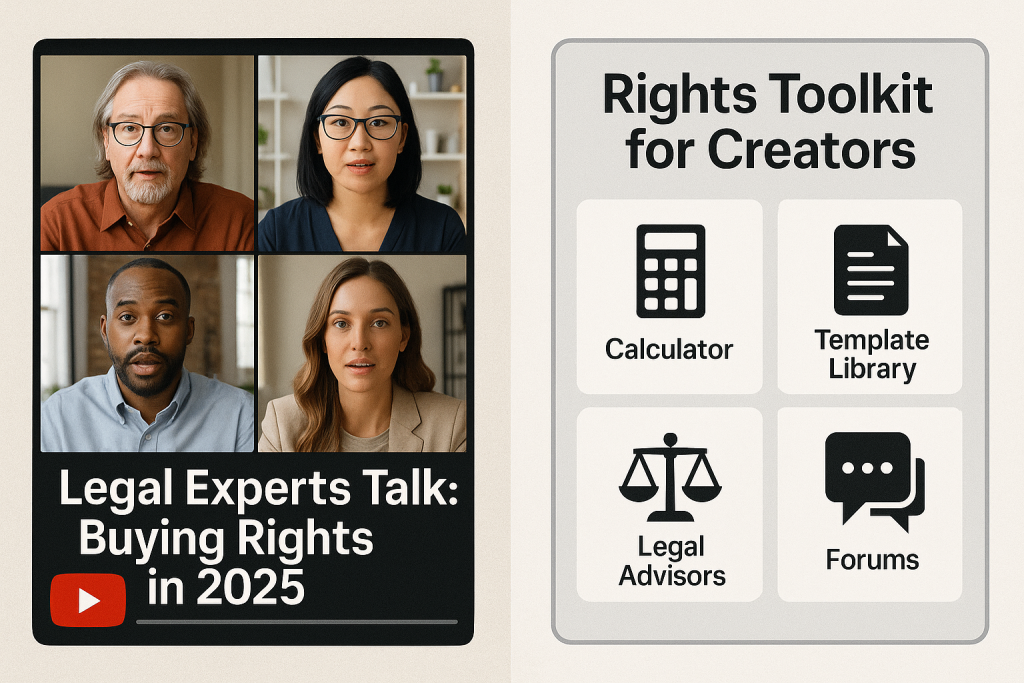
Expert Voices – Interviews with Producers & Lawyers
Buying film rights isn’t just a legal process—it’s a strategic one. To help you navigate this space with confidence, we asked top legal experts and independent producers about what works (and what doesn’t) in 2025.
What Legal Experts Say About Buying Rights in 2025
- 🎙 Meera Nair – Media & IP Lawyer (India):
“Too many indie creators skip due diligence. Always verify chain of title. If someone says they own the rights, ask for the original acquisition contract—don’t just take a signed letter.” - 🎙 Richard Faulk – Entertainment Attorney (U.S.):
“Streaming platforms now ask for more documentation than ever. Just saying ‘I have the rights’ won’t cut it. Keep every piece of paper—especially signed agreements, payment receipts, and correspondence.” - 🎙 Sanjana Iqbal – Copyright Litigator (EU):
“In the EU, moral rights are enforceable even if you buy adaptation rights. You can’t twist the story or message without the author’s written approval. Include a ‘creative treatment review’ clause to avoid future blocks.”
Producer Tips: Finding Hidden IP Gems
- 🎥 Tanmay Bhagat – OTT Content Producer:
“The best stories are hiding in plain sight. I track regional award winners, short story contests, or even trending Reddit threads—then contact creators directly. Most haven’t even thought about selling rights.” - 🎥 Alina Suresh – Indie Feature Director:
“Public domain doesn’t mean ‘easy.’ I’ve reworked forgotten folk tales and historical events into modern scripts—completely royalty-free. But I still hire a lawyer to vet local folklore copyright status.” - 🎥 Carlos Mendes – Docu-Series Showrunner:
“Source real-life stories from NGOs or nonprofits. They often have untold stories with emotional weight and exclusive access. Partner with them to build trust and get permissions ethically.”
Tools & Resources for First-Time Buyers
Whether you're licensing your first story or prepping for negotiations, these tools make your journey smoother and safer.
Rights Cost Calculator (Interactive Widget)
Use this calculator to estimate how much buying film rights might cost based on:
- Type of content (book, article, short film)
- Region of usage (India, U.S., global)
- Duration and exclusivity
- Distribution formats (film, web, TV, streaming)
📊 Try the calculator now → Launch Cost Estimator Tool
List of Recommended Legal Advisors
- Anand & Anand (India): Strong in literary and adaptation rights
- Frankfurt Kurnit Klein & Selz (U.S.): Film, TV, and podcast licensing
- DLA Piper (UK/EU): Global IP litigation and licensing
- Stage32 Legal Lounge: Peer-reviewed lawyer recommendations for indie creators
Template Library, Forums, and Government Links
🗂 Template Library:
- Option & Purchase Agreement PDFs (with comments)
- Reversion Clause Toolkit
- Territory Map Sample Template
💬 Forums & Communities:
- IndieTalk Forum (Legal Corner)
- Reddit: /r/Filmmakers and /r/LegalAdvice
- Stage32: IP & Licensing Lounge
📚 Government Links:
- Indian Copyright Registry
- U.S. Copyright Office
- EUIPO (European IP Office)
Conclusion: Your Story Deserves Legal Protection and Strategic Power
Buying film rights isn’t just a legal checkbox—it’s a strategic investment in your creative future. Whether you're adapting a short story, licensing a memoir, or buying distribution rights to a finished film, the way you structure your deal will determine how far your project can go.
Key Takeaways
- Think like a producer, not just a storyteller. Licensing rights opens doors to distribution, revenue, and protection.
- Always verify ownership. Ask for proof—don’t rely on verbal claims or email promises.
- Use vetted contracts. Even a basic option agreement should include duration, territory, and reversion clauses.
- Understand the regional legal landscape. Buying rights in India, the U.S., or the EU requires different tactics and timelines.
- Start small. Many successful filmmakers began with $200 options and turned them into multi-platform deals.
- Build relationships. Rights are often about trust—especially when approaching authors, agents, or distributors directly.
Your Next Steps
- ✅ Download your free rights-purchasing checklist to stay on track during negotiations
- 📩 Need legal help? Contact our verified film rights legal partner for a consultation
- 🎬 Want to maximize your rights deal? Read our guide to Monetizing Film Rights via Streaming Platforms
FAQ
Q1: Can I buy film rights as an individual creator?
Yes. You don’t need to be a studio or large production house. Many authors, bloggers, and rights holders are open to working with independent creators—especially if you have a clear vision and plan.
Q2: How much do movie rights usually cost?
Costs vary greatly. For example:
- A short story or blog: $200–$2,000
- A niche novel: $1,500–$10,000
- Popular or bestselling IP: $25,000–$500,000+
Also factor in legal fees, which typically range from $300 to $1,500 per deal.
Q3: What's the difference between an option and full rights purchase?
An option gives you exclusive rights to develop the project for a limited time (usually 12–24 months). You can decide later whether to purchase the full rights.
A purchase agreement transfers the rights immediately, with long-term usage terms defined up front.
Q4: How long do film rights typically last?
Rights can last from 1 year to perpetuity, depending on your contract. Standard terms include:
- Option Period: 12–24 months
- Initial License Term: 3–7 years
- Reversion Clause: Rights return to the owner if the project isn't produced within the timeline
Q5: Do I need separate rights for streaming or international distribution?
Yes. Film rights are often broken into:
- Platform rights (e.g., YouTube, Netflix, TV broadcast)
- Geographic rights (India only, worldwide, EU-specific)
If you're planning to distribute across formats or regions, make sure your contract spells out each one.