Chain of Title: The Silent Backbone of Every Safe Film Rights Deal

When you buy film rights or buy TV show rights for your platform, channel, or streaming service, you're not just buying content—you're buying a legal package of intellectual property rights. The single most important legal concept behind any safe film rights deal or TV rights licensing agreement is the Chain of Title.
A clean, well-documented Chain of Title protects buyers, sellers, and distributors from copyright claims, platform takedowns, and expensive legal disputes. Whether you are acquiring a Turkish drama for MENA, a Latin American telenovela for Europe, or a factual series for FAST channels, understanding Chain of Title is essential for every B2B film rights marketplace transaction.
What Is Chain of Title in Film and TV?
Chain of Title in the context of film rights and TV show rights is the complete set of legal documents that prove:
- Who created and owns the original intellectual property (script, format, story, characters)
- Who produced and financed the final film, series, or TV program
- How ownership and distribution rights have been transferred, licensed, or assigned over time
- Who currently has the legal authority to sell or license rights for specific territories, languages, and platforms
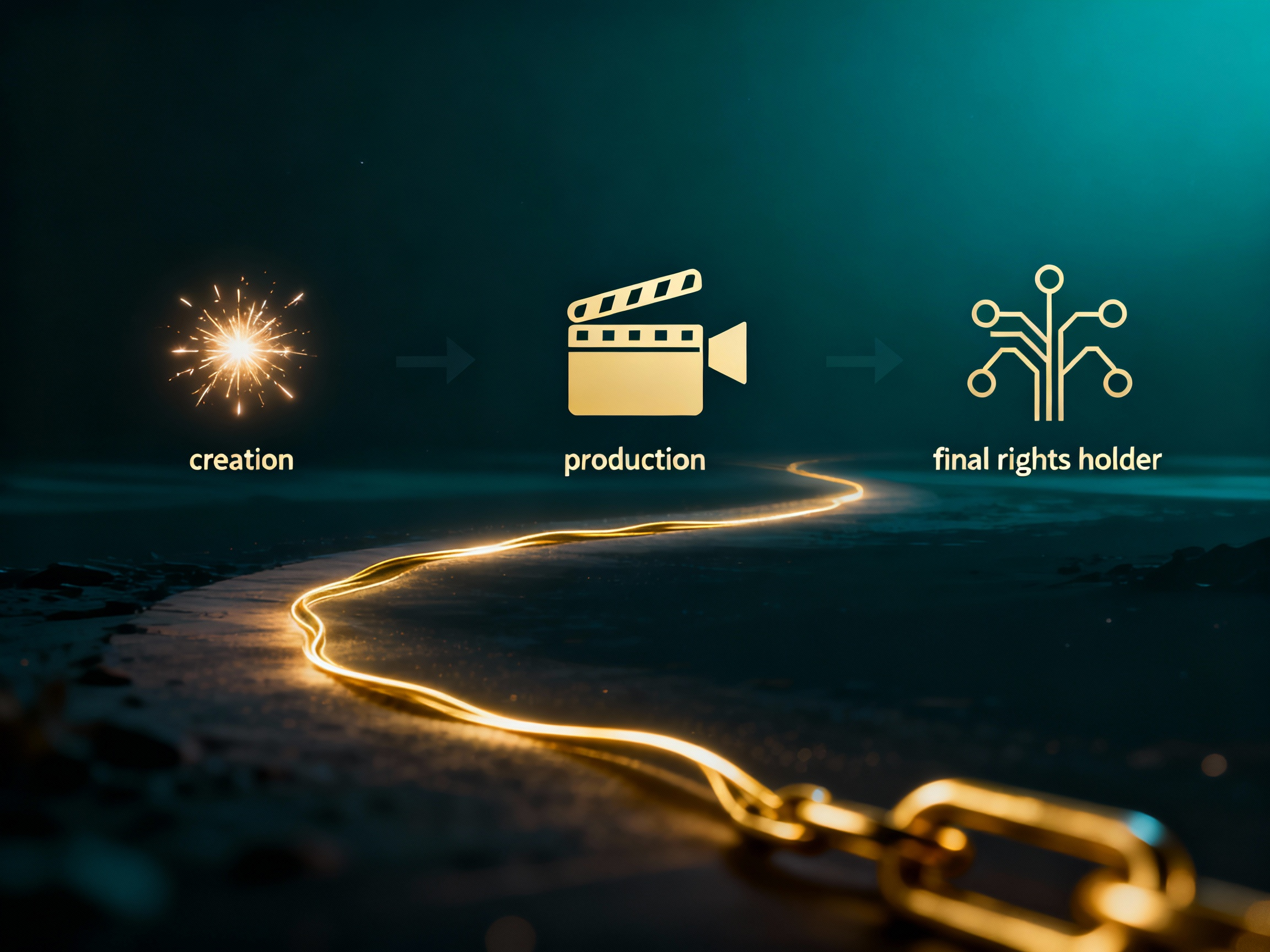
In simple terms: Chain of Title is the legal "paper trail" that shows how a project moved from idea to finished screen content, and who owns which rights at each step. If this chain is broken, unclear, or incomplete, your TV rights licensing deal may be legally unsafe.
Why Chain of Title Is Critical When You Buy TV Show Rights or Film Rights
Many buyers focus on price, language versions, and delivery timelines when they buy TV show distribution rights or VOD rights. But without a clean Chain of Title, none of that matters. Here's why Chain of Title is mission-critical:
- Legal protection: Prevents claims from writers, actors, musicians, co-producers, or previous distributors.
- Platform acceptance: Broadcasters, streamers, and AVOD/FAST platforms require proof of clear rights.
- Monetization security: Ensures your investment in MG (Minimum Guarantee) or revenue-share is protected.
- Brand safety: Avoids reputational damage from takedowns and public disputes over copyright ownership.
- Compliance: Helps you meet anti-piracy, copyright, and IP regulations in multiple jurisdictions.
Film Rights vs. Copyright vs. Chain of Title: What's the Difference?
These three concepts are closely related but legally different:
- Copyright: Legal protection given to creators of original works such as scripts, music, and footage. It defines who owns the underlying work.
- Film rights / TV rights: Specific permissions to exploit the copyrighted work in defined ways (e.g. free TV, pay TV, SVOD, AVOD, airline rights, remake rights).
- Chain of Title: The complete record of contracts and transfers showing how those rights moved from the creator to producers, sales agents, and current rights holders.
When you license TV show rights or buy film distribution rights, you are not buying the whole copyright in most cases. You are licensing certain rights, for specific territories, for a defined period, under specific conditions. The Chain of Title proves that the person selling those rights actually owns them.
The Complete Chain of Title Package: Documents You Must See Before Signing
A professional Chain of Title package for film rights and TV licensing typically includes:
- Script and Story Rights: Writer agreements, option agreements, book-to-film contracts, format rights.
- Producer and Production Company Documents: Production contracts, finance plans, equity and co-production agreements, proof of company registration.
- Talent & Crew Agreements: Contracts with main cast, supporting cast, director, writers, key crew; all with IP assignment and image/performance rights.
- Music Rights: Composer agreements, sync licenses, master use licenses, library music licenses, cue sheets (essential for TV and streaming platforms).
- Location and Trademark Clearances: Location releases, brand and logo approvals, artwork clearances, product placement agreements.
- Archival & Stock Footage Licenses: Contracts confirming usage rights for footage or stills sourced from third parties.
- Co-Production and Split-Rights Agreements: Details of ownership shares, territories reserved by each partner, and recoupment structures.
- Previous Licensing and Distribution Agreements: List of territories already sold, rights windows, and whether the rights have reverted.
- Copyright Registrations: Certificates from national or regional copyright offices proving legal ownership.
- Delivery and Asset Rights: Confirmation that the seller controls masters, subtitles, dubbed versions, artwork, and marketing materials.
Step-by-Step Checklist for Buyers: How to Verify Chain of Title Before You Buy TV Show Rights
If you're a buyer, distributor, aggregator, or streaming platform, use this checklist before signing any content licensing agreement:
- Request the full Chain of Title package early in the negotiation, not after you sign the deal.
- Confirm the legal identity of the rights holder via company registration, trade registry, or official producer records.
- Check that all writers, creators, and format owners assigned rights to the production company or IP owner.
- Review cast and director agreements to ensure image and performance rights are clearly granted for all territories and platforms.
- Verify music rights in detail (this is a major risk point) and confirm that TV and streaming usage is fully covered.
- Review co-production agreements for any reserved territories, rights, or holdbacks.
- Analyze distribution history to ensure territories you are buying haven't already been sold exclusively to another buyer.
- Check for reversion of rights where licensing periods have expired and rights have reverted to producers or creators.
- Cross-check copyright registrations in relevant jurisdictions where high-value exploitation is expected.
- For large MG deals, request a legal opinion from a media/entertainment lawyer on the Chain of Title.
Common Risks and Red Flags in Film and TV Chain of Title
When you buy TV series rights or license film catalogs for multiple territories, these red flags should make you cautious:
- Seller refuses or delays sharing key contracts and copyright documents.
- Music is licensed "for festival only" or lacks clear TV/online rights.
- Co-producers or financiers are mentioned but not properly documented.
- Some territories look over-sold or double-sold in previous deals.
- Platforms like YouTube or broadcasters have previously removed content for copyright claims.
- Talent contracts for main actors or director are incomplete or missing.
- There is a history of disputes around the title on public or industry databases.
How Platforms View Chain of Title: Netflix, Amazon, YouTube, and Broadcasters
Major streaming services and broadcasters treat Chain of Title as a mandatory part of their content acquisition workflow:
- Netflix & global streamers: Require clean rights, proof of copyright ownership, and global or territory-specific clearances.
- Amazon Prime and other SVOD platforms: Ask for detailed rights information and often request warranties/indemnities around IP.
- YouTube / AVOD / FAST: Use tools like Content ID; if the Chain of Title is unclear, monetization can be blocked or redirected.
- TV networks and pay TV operators: Require comprehensive documentation for compliance, especially when airing content in regulated markets.
For anyone who wants to monetize content across multiple platforms and territories, having a strong Chain of Title is no longer optional—it's a basic requirement.
How Rightika Helps Buyers and Sellers with Chain of Title
Rightika is a B2B platform focused on buying and selling film rights and TV content rights in a transparent, professional environment. Chain of Title is at the heart of that mission. On Rightika:
- Verified sellers: We work with recognized producers, distributors, and rightsholders.
- Structured rights information: Titles can be listed with clear data on territories, windows, and media rights.
- Support for Chain of Title review: Buyers can request documentation review before committing to a deal.
- Safe negotiation environment: Ideal for MG deals, rev-share agreements, and hybrid licensing models.
- Optimized for international buyers: Rightika is built for cross-border content deals, where Chain of Title clarity is critical.
Best Practices for Producers and Rights Holders: How to Clean Your Chain of Title Before Listing
If you're a producer, sales agent, or distributor planning to list your titles on a B2B rights marketplace or pitch them to international buyers, follow these best practices:
- Centralize all contracts, licenses, and releases in one secure location.
- Ensure all writer, director, and actor agreements include clear IP assignment and global exploitation rights.
- Review all music licenses and upgrade any "limited use" agreements if you plan for TV or OTT exploitation.
- Prepare a summary sheet listing all sold territories, rights, and license expiry dates.
- Obtain updated copyright registrations if ownership has changed.
- Resolve any internal disputes with partners, co-producers, or financiers before entering major deals.
- Create delivery packages that include legal documents as well as technical materials for broadcasters and platforms.
FAQ: Chain of Title, Film Rights, and TV Show Licensing
1. What is Chain of Title in film and TV?
Chain of Title is the complete history of contracts and rights transfers showing who owns a film, series,
or TV show and who can legally license it.
2. Why is Chain of Title important for buying TV show rights?
Because it proves that the seller really owns the TV distribution rights they want to license
to you and that no one else can legally block your exploitation.
3. Can I buy TV show rights without seeing the Chain of Title?
Technically yes, but it's extremely risky. Professional buyers and networks always review Chain of Title
before closing a deal.
4. What happens if Chain of Title is incomplete?
You may face copyright claims, platform takedowns, blocked monetization, and legal disputes. Your investment
in film rights or TV rights may be lost.
5. Where can I safely buy and sell film and TV rights?
On platforms like Rightika that are designed for B2B rights transactions, with a strong focus
on legal clarity, rights data, and Chain of Title transparency.
Conclusion: Chain of Title Is Your Legal Safety Net in the Film & TV Rights Business
In the modern content economy—across broadcast TV, SVOD, AVOD, FAST channels, and digital platforms— Chain of Title is one of the most important concepts for anyone involved in buying film rights, licensing TV show rights, or managing international content catalogs.
A clean, well-documented Chain of Title means your deals are legally sound, your content is platform-ready, and your revenue is protected. Whether you are a buyer, seller, distributor, or producer, making Chain of Title a non-negotiable part of your workflow is the smartest step you can take in the global film and TV rights business.